Last updated October 15, 2026
How to Hire a ADU Contractor in San Francisco: A Step-by-Step Guide
The lowest ADU bid in San Francisco typically excludes between $18,000 and $35,000 in soft costs that the winning contractor knows you’ll have no choice but to pay once demolition has started. Permit fees, structural engineering, soil reports, utility connections, and school district impact fees all sit quietly outside the base construction number. A homeowner who hires on price alone inherits those costs as surprises. This guide and our ADU Cost Breakdown: The San Francisco Homeowner’s Reference for 2026 reframe the hiring decision around verifying what’s actually inside the number, line item by line item, before you sign anything in San Francisco.
Quick Answer
To hire an ADU contractor in San Francisco, require a written estimate with every permit fee, engineering cost, and utility connection listed as a specific dollar amount, not an allowance or a “by owner” note. Verify the contractor holds a valid California General B license with active workers’ compensation coverage and a permit history specific to ADUs in San Francisco, then confirm in the contract that any cost increase or timeline extension requires your written approval before work proceeds.
Table of Contents
- What an ADU Really Costs in San Francisco
- The Line Items Every Estimate Must Include
- How to Verify ADU-Specific Experience in San Francisco
- Who Comes to Your Property: Background Checks and Identity Standards
- Three Contract Clauses That Protect You
- Red Flags Specific to ADU Bids
- The Hiring Process, Step by Step
- Prefab Versus Site-Built: What Changes in the Hiring Math
What an ADU Really Costs in San Francisco
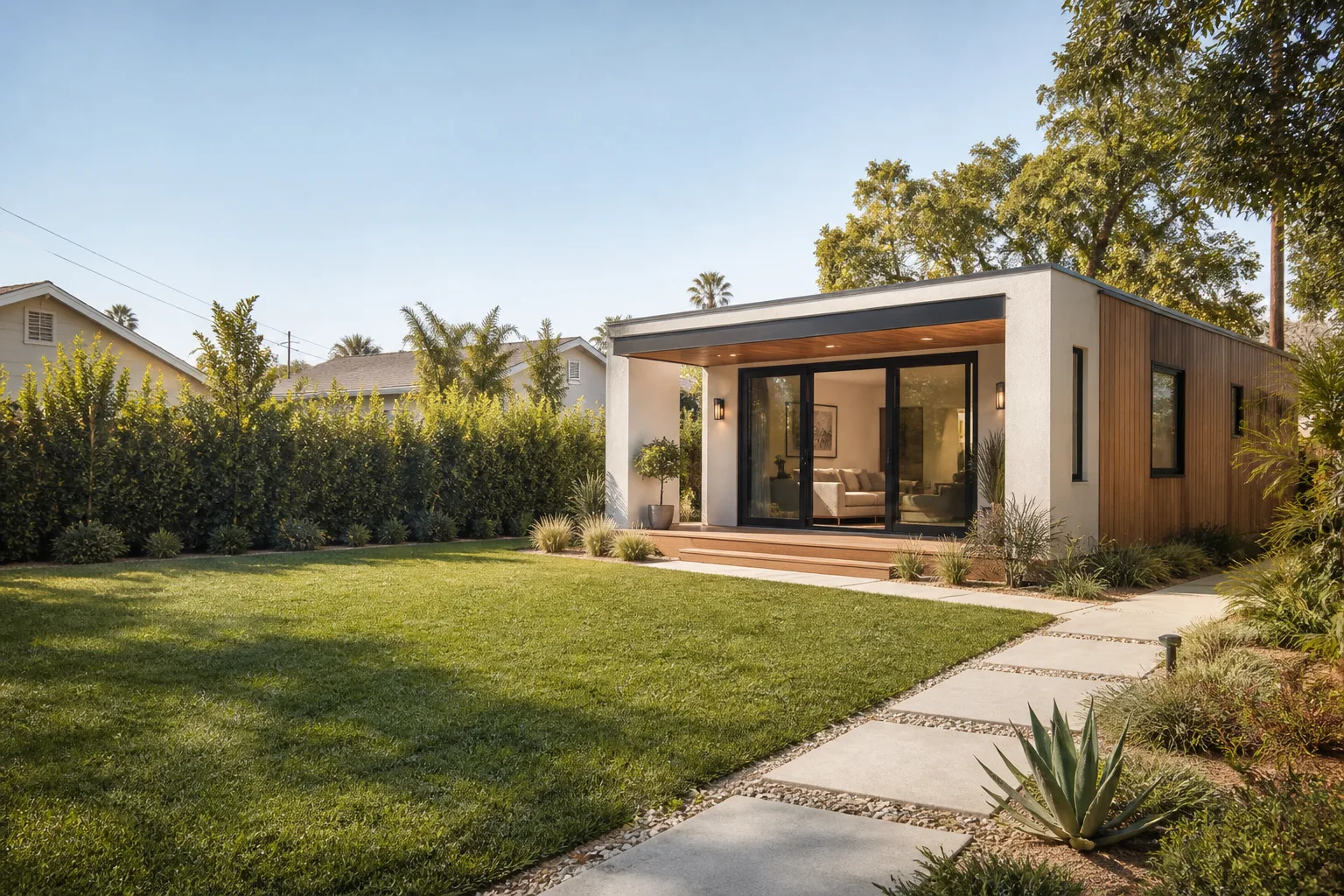
We’ll start with the number everyone asks about first. A detached ADU in San Francisco runs roughly $180,000 to $320,000 for the structure itself, depending on size, finish level, and whether it’s site-built or a prefab line like Cover or Dvele. A garage conversion lands lower, typically $120,000 to $200,000, because the foundation, roof, and exterior walls already exist. A room addition attached to the main house falls in a similar range to a garage conversion but carries different engineering requirements for tying into the existing roofline.
Those numbers are for the built structure. Site work is where San Francisco specifically gets expensive. The city’s hilly terrain means many lots need retaining walls, grading, or deep foundations that a flat suburban lot would never require. A sloped lot in neighborhoods like Glen Park or Noe Valley can add $30,000 to $80,000 in site preparation alone. Your lot’s soil report will determine whether you’re on solid bedrock or the sandy fill common in the Sunset and Richmond districts, which affects foundation design and cost. When we walk a site in the Sunset, we expect different foundation conversations than we do in Bernal Heights, as covered in our Seasonal ADU Care for San Francisco: Year-Round Homeowner’s Guide.
The honest way to compare bids is to ask for the all-in number: construction, fees, site work, and utility connections as separate line items that total to a single figure. A bid that includes only the construction number will always look cheaper. It isn’t. The excluded costs will find their way to you either way, and they’re harder to control once work has begun. For a broader view of how ADU costs fit into home addition budgets, see our Home Addition Contractor in San Francisco guide.
San Francisco’s Department of Building Inspection charges permit fees based on project valuation, and those fees routinely reach $6,000 to $12,000 on a standard ADU; see ADU Permits, Codes & Inspections in CA: What You Need to Know for the full picture. Add plan check fees, school impact fees (which apply to ADUs over 750 square feet), and utility connection fees from PG&E and SFPUC, and the paperwork alone can approach $20,000 before a single hammer swings. Every estimate you receive should name these fees explicitly, not bury them under a single line reading “permit costs.”
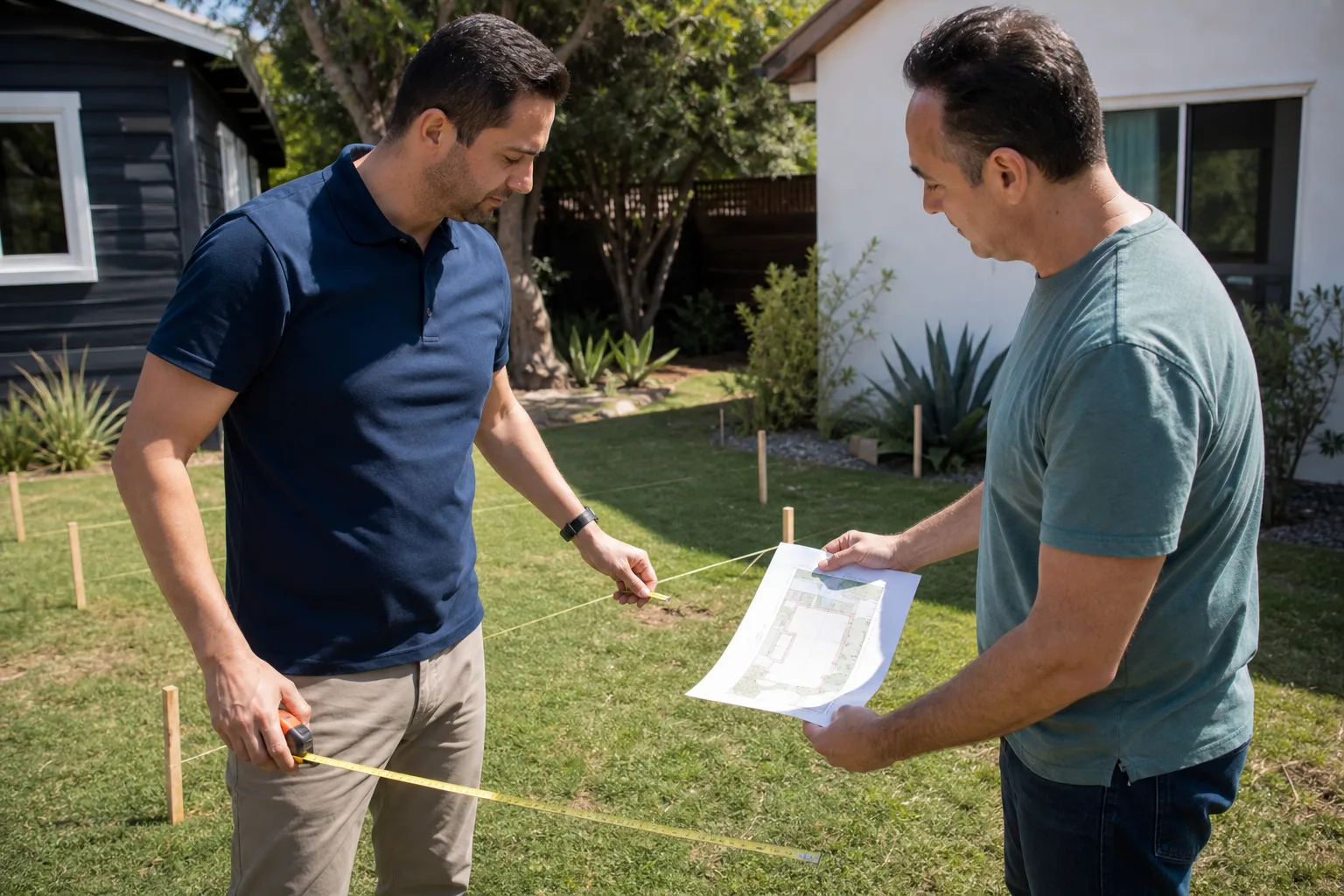
The Threshold Standard at Sutton ADU Builders requires a written price delivered before any work begins. That means the permit fees, the engineering, the site work, the utility connections, and the construction are all itemized in one document. No allowances, no “to be determined” lines, no exclusions discovered mid-project. If you’re comparing bids from multiple contractors, one of the fastest ways to see who’s being straight with you is to ask: “What’s in the number?” If the answer gets vague, walk away.
The Line Items Every Estimate Must Include
Most ADU bids fail at the estimate stage, not the construction stage. The contractor writes a number that covers framing, roofing, drywall, and finishes, and quietly leaves out the costs that happen before materials arrive. You’re left comparing a complete number against an incomplete one. Here’s the fix: require every estimate to break out these specific line items, each with a dollar amount.
- Permit fees and plan check fees. The City of San Francisco charges separate fees for the building permit, the plan check, and any over-the-counter review. Your estimate should name the total, and it should be a number, not a phrase like “included” or “to be determined.”
- Structural engineering. ADUs require stamped drawings from a California-licensed structural engineer. This typically costs $4,000 to $9,000 in San Francisco. If the estimate doesn’t mention engineering at all, the contractor expects you to hire an engineer separately and hasn’t factored that coordination time into the schedule.
- Soil and foundation report. San Francisco’s varied geology means the Department of Building Inspection will likely require a soils report before approving foundation plans. Expect $2,500 to $5,000 for the report and any recommended foundation upgrades.
- Utility connections. Sewer lateral replacement, water service upgrade, and PG&E panel work are frequently excluded from ADU bids because the contractor can’t nail the exact scope until the utility companies get involved. A straight estimate names the anticipated cost and states clearly who pays for overages if the utility scope expands.
- Site preparation. Demolition of existing structures, tree removal with a permit, grading, and retaining walls. On San Francisco’s sloped lots, this can be the single most variable line item in the entire project.
- Finishes and fixtures. Kitchen appliances, bathroom fixtures, flooring, lighting. Some contractors quote “builder basic” finishes to keep the number attractive. You should know exactly what level of finish you’re paying for before you sign.
- Landscaping and drainage. San Francisco requires stormwater management plans on many ADU projects. A new structure changes how water moves across your lot, and the city wants to know where it’s going.
Ask for a line that reads “contingency” with an explicit percentage, usually 5% to 10% of the construction cost, and a written commitment that the contingency is not spendable without your signature. That’s the difference between a transparent builder and one who uses “unforeseen conditions” as a blank check.
At Sutton ADU San Francisco, we write every estimate this way because we’ve watched too many San Francisco homeowners get cornered. The 365-Day Done Right Promise starts with the estimate, not the finished building. If the number changes mid-project for any reason, you approve the change in writing before work continues. No scope creep passed silently to the bill.
How to Verify ADU-Specific Experience in San Francisco
A general contractor who’s built two remodels in Marin is not automatically qualified to build an ADU in San Francisco. The city’s planning code, the state’s ADU statutes, and the local permit process interact in ways that trip up even experienced builders who’ve never done an ADU before. Here’s how to check for the right kind of experience.
First, confirm the contractor holds a California General B license in active status. You can verify this with the Contractors State License Board online in about two minutes. A General B covers residential additions and ADUs. If the contractor presents only a specialty license, like a C-6 cabinet license or a C-39 roofing license, they cannot legally act as the general on your ADU project. Ask for the license number and run it. The CSLB also lists any citations, suspensions, or complaints.
Second, ask specifically about ADU permit history in San Francisco. The contractor should be able to name the neighborhoods where they’ve pulled ADU permits: “We’ve permitted detached units in the Excelsior, the Mission, and the Outer Sunset.” If they can’t, they either haven’t done ADUs in the city or they’re being evasive. San Francisco’s Residential Design Advisory Team process, the local ADU ordinance, and the city’s interpretation of state ADU law all shape what’s possible on a given lot. A builder who’s permitted ADUs here knows which zoning districts allow what, and which historic district overlays add review time.
Third, ask about the specific type of ADU you’re considering. A contractor who’s converted ten garages in the Richmond may have zero experience with a detached new-construction unit in a backyard in Noe Valley. The foundation work, the utility runs, and the site access are completely different problems. If you’re considering a prefab or modular line, ask whether the contractor has worked with that manufacturer before. Sutton ADU Builders has experience with recognized ADU product lines including Cover, Dvele, and Mighty Buildings, along with Tuff Shed conversions and James Hardie exterior systems. That matters because prefab manufacturers have their own installation specifications, and a builder who doesn’t know them will create delays.
For a deeper look at what makes a builder specifically qualified for ADU work, see our guide to ADU Builders in San Francisco.
Who Comes to Your Property: Background Checks and Identity Standards
You’re about to hand keys to your home, your backyard, and your family’s daily routine to a crew you’ve never met. That’s not a minor inconvenience. It’s a legitimate security consideration for parents with young children at home during the day, for homeowners who work remote and answer the door alone, and for older homeowners who moving a project forward without worrying about who’s outside. The hiring decision should include a hard look at who actually shows up.
Ask every contractor you’re considering this direct question: “What vetting do your field employees go through, and how do I verify who’s at my door?” The answer tells you everything. Some contractors will describe a process. Others will wave it off with “they’re good guys.” The second answer is a red flag.
The Threshold Verified standard at Sutton ADU Builders is a named system, not a vague assurance. Every technician who arrives at your San Francisco property is background-checked and identity-verified. Before the visit, you receive the technician’s name and photo. When they arrive, they’re in a clean, marked uniform and they show a photo ID badge at the door. Every time. That’s the standard we operate under, and it’s the standard you should demand from anyone you let onto your property for a multi-month construction project.
Our name carries the old English meaning of a south farm. Adding a second home to your lot in San Francisco is exactly that kind of settled, rooted decision. It deserves a builder who treats your home as a place where your family lives, not a job site to be rushed through. The people who work on your project should be people whose names you know before they arrive.
Three Contract Clauses That Protect You
The contract is where hiring goes right or wrong. Most homeowners focus on the total price and skim the rest. Here are the three clauses that matter most on an ADU project specifically, and what each one should say.
Clause one: the written change order requirement. Your contract should state that no change to the scope of work, the project cost, or the timeline takes effect unless it is signed by both parties in writing. In ADU projects, changes come fast: an unexpected sewer line location, a PG&E requirement for a new transformer, a planning department request for a revised setback. Without a written change order clause, these changes get made verbally on site and billed later as “extra work.” With the clause, nothing moves without your knowledge and signature. At Sutton, this is baked into the Threshold Standard: a written price before work begins, and written change orders before any variation.
Clause two: the timeline extension approval requirement. San Francisco ADU permits take longer than anyone wants, and a contractor can’t honestly guarantee a specific permit approval date. What your contract can require is that any project delay beyond the plan must be communicated to you in writing, with a reason and a revised schedule. You aren’t paying for contractor scheduling conflicts or poor planning. The clause reads something like: “Contractor shall provide written notice of any delay within five days of the event causing the delay, and no adjustment to the project schedule is effective without Owner’s written approval.”
Clause three: the permit and inspection responsibility clause. Your contract should name who pulls the permits (the contractor, preferably), who schedules inspections, and who is responsible for correcting any work that fails inspection. It should also state that final payment is not due until the project receives final inspection approval from the San Francisco Department of Building Inspection. This protects you from paying for work that hasn’t passed. The 365-Day Done Right Promise at Sutton covers completed work for one full calendar year from project completion, and it’s written on every project. If an element fails, we make it right. A free second visit is included if a repair or element of the build fails. No haggling, no fee.
For attached additions, the engineering and tie-in requirements differ enough that the contract language should account for them. See our Room Addition Contractor in San Francisco page for specifics on how room additions differ from detached ADUs.
Red Flags Specific to ADU Bids
Here are the warning signs that show up in ADU bids specifically, not just in contractor bids generally. Each one has cost real money to San Francisco homeowners who missed it.
Red flag one: a permit timeline promise. If a contractor tells you they can get your ADU permit approved in a specific number of weeks, and they state it as a guarantee, walk away. No contractor controls the San Francisco Planning Department, the Residential Design Advisory Team, or the Department of Building Inspection. A competent builder will give you a realistic range based on similar projects in your neighborhood, and will own the parts they control. A promise of “permit in six weeks, guaranteed” is either ignorance or manipulation. Neither belongs on your project.
Red flag two: “plans by owner” or “engineering by owner” lines. If the estimate shows design or engineering as something you’ll handle yourself, the contractor has quietly shrunk their scope. You’ll be coordinating with an architect and a structural engineer you have to find, vet, and schedule. The contractor is passing you work without passing you savings. A full ADU estimate includes design coordination, either in-house or through a named subconsultant with a specific fee.
Red flag three: a site visit that’s too quick. If a contractor spends twenty minutes walking your San Francisco lot and sends a bid the next day, they haven’t looked at the sewer lateral location, the soil, the access path for equipment, the neighbor’s window, or the rear yard grade. You want a contractor who comes back with questions, not one who comes back with a number. The lots in this city are too varied for a drive-by estimate to be worth anything.
Red flag four: a bid that’s dramatically lower than the others. An ADU bid that’s $60,000 under every other bid isn’t a deal. It’s a missing scope. Ask what’s excluded. If the answer is vague, you’ve found your answer. The money will come due, and it will come due after demolition has started, when you have no leverage.
Red flag five: no mention of inspections. San Francisco requires framing, electrical, plumbing, insulation, and final inspections, at minimum. A contractor who doesn’t discuss the inspection schedule as part of the estimate isn’t planning to be there for them, or hasn’t done one of these projects before. Both are disqualifying.
The Hiring Process, Step by Step
Here’s the full sequence, start to sign, in order. We’ve built this from watching hundreds of San Francisco ADU projects move from first phone call to move-in day.
- Define your ADU type before you call anyone. Detached new construction, garage conversion, or attached addition. Each has a different cost range, permit path, and construction timeline. Knowing which one you’re pursuing keeps bids comparable. If you’re not sure, our Sutton ADU San Francisco home page walks through the options.
- Get a sense of your lot’s constraints. Check your property’s zoning district, any historic overlay, and your lot’s slope. The San Francisco Planning Department’s property information map is public. A contractor should verify everything, but it helps to know going in whether you’re in an RH-1 or RM-1 district, and whether a historic review will add time.
- Talk to three contractors by phone, then on site. Ask each one the same questions: What’s your ADU permit history in San Francisco? What do you need from me before you can write a full estimate? How do you handle change orders? What’s your vetting process for field crews?
- Request written estimates with the line items above. Give each contractor the same scope description so the numbers are comparable. If one estimate lacks a permit line and another has it, the one with the line is the one that’s honest with you.
- Compare the numbers and the people. Price matters, but so does the written price guarantee, the change order process, and the identity standard for the crew. A low bid with vague scope is worth less than a slightly higher bid with real specificity.
- Check licenses and references. Run the CSLB license number. Call two references who had a similar ADU type built in the last two years. Ask the references what changed from the estimate, and how it was handled.
- Sign a contract with the three clauses in place. Written change orders, written timeline adjustment approval, and permit and inspection responsibility to final approval. Nothing verbal.
- Stay involved during design and permitting. The contractor should keep you informed. If you’re getting radio silence during the permit wait, that’s not normal. Ask for a weekly update, even if it’s a one-line email saying “still in plan check, no action from DBI this week.”
Hiring well means hiring once. The time you spend verifying before the contract is minuscule compared to the time and money you’ll spend untangling a bad hire after construction starts.
Prefab Versus Site-Built: What Changes in the Hiring Math
San Francisco homeowners increasingly choose prefab ADUs from manufacturers like Cover, Dvele, Mighty Buildings, or Boxabl. The value proposition is straightforward: factory-built modules arrive on a truck, and the on-site work is largely foundation, utility hookup, and finish. That reduces the construction timeline and limits the number of days a crew is on your property. For homeowners with security concerns about extended on-site work, that’s a significant benefit.
But the hiring decision doesn’t get simpler. The contractor’s role shifts from builder to site coordinator: preparing the pad, pulling permits, coordinating the crane or tilt-up placement, and connecting utilities. The contractor needs direct experience with the specific manufacturer, because each line has different specifications. A Dvele unit has different foundation requirements than a Mighty Buildings unit. A contractor who’s never coordinated a module delivery doesn’t know the street access requirements, the crane swing radius issues on a narrow San Francisco street, or how to stage the site for a flatbed that’s forty feet long.
Ask the contractor to name the prefab manufacturers they’ve worked with, and ask for a recent project location. Sutton ADU Builders has authorized experience with Cover, Dvele, Mighty Buildings, Plant Prefab, and Boxabl, and we bring that experience to the estimate conversation. The site work, the permitting, and the utility connections are all still your responsibility, and they still follow the same San Francisco rules. The prefab doesn’t remove the city paperwork; it changes the construction phase.
The estimate structure is different for prefab because the manufacturer’s price is typically separate from the contractor’s scope. You’ll see a line for the module itself, a line for shipping and placement, and a line for the contractor’s site work. Make sure all three are included in the total you’re comparing against a site-built bid. A prefab estimate that only shows the contractor’s scope but not the factory price isn’t complete, and it makes the project look deceptively cheap.
Common Mistakes to Avoid
- Hiring the lowest bid without checking what’s excluded. The $18,000 to $35,000 in excluded soft costs will find you eventually. Demand line items before comparing numbers.
- Assuming a general contractor has ADU experience. San Francisco’s ADU ordinance creates specific opportunities and constraints. Ask for local ADU permit history specifically, not just “construction experience.”
- Signing a contract without a written change order clause. Verbal agreements during construction become unbillable surprise invoices later. The clause protects you from that.
- Believing a specific permit timeline promise. No contractor controls the San Francisco Planning Department or DBI. A realistic range is honest; a guarantee is not.
- Skipping the license check. Two minutes on the CSLB website will tell you if the contractor is licensed, insured, and has any active citations. Skipping it is choosing to fly blind.
- Not asking who will physically be on your property. You deserve to know who’s at your door before they arrive. Demand a named vetting standard, not a verbal “trust me.”
- Ignoring site work costs on sloped lots. San Francisco’s hills add real money to foundations, retaining walls, and grading. An estimate that treats site work as an afterthought is incomplete.
When to Call a Professional
You should bring in a professional ADU contractor when you’re serious about understanding what’s buildable on your specific San Francisco lot, not just what’s allowed in general. That moment usually comes after you’ve looked at your finances, confirmed you have room in the budget, and want to know the real number for your property, your slope, and your zoning district. It also comes when you’ve received a bid that looks dramatically different from another, and you want an expert to tell you what the difference actually is. If you’re comparing prefab manufacturers, a contractor who’s worked with the lines you’re considering can save you from choosing a product that doesn’t fit your street access or foundation conditions. Sutton ADU San Francisco offers free estimates in San Francisco; call (831) 272-7212 to talk through your lot and your options, or browse more guides & resources.
Frequently Asked Questions
A detached ADU in San Francisco typically runs $180,000 to $320,000 for the structure, with an additional $30,000 to $80,000 in site work on sloped lots, and $15,000 to $25,000 in permit fees, engineering, and utility connection costs. Garage conversions start lower, often $120,000 to $200,000, because the existing structure reduces foundation and framing work. Call (831) 272-7212 for an exact estimate on your property, free.
San Francisco ADU permits typically take three to nine months from application to approval, depending on your zoning district, whether historic review applies, and the current DBI workload. No contractor can honestly guarantee a shorter timeline, though an experienced ADU builder can reduce delays by submitting a complete, correct application the first time and responding to plan check comments promptly.
Yes, garage conversions are legal ADUs under California state law and San Francisco’s local ADU ordinance, though the city is considering changes to how garage conversions are treated going forward. You’ll need to replace the parking space if required by your zoning district, and the conversion must meet current building code for habitable space, including insulation, ventilation, and emergency egress. Call (831) 272-7212 to find out what applies to your property.
School district impact fees in San Francisco apply only to ADUs over 750 square feet, as required by California state law. ADUs 750 square feet or smaller are exempt from school fees. Your builder should itemize this fee if it applies to your project, not hide it in a general “fees” line.
A written estimate at Sutton ADU San Francisco is a line-item document with specific dollar amounts for every phase: permits, engineering, site work, construction, finishes, and utility connections. A quote is often a single number with no breakdown. The written estimate is what lets you compare bids honestly and what protects you if costs change. The Threshold Standard requires the written price before any work begins, always.
Check the California Contractors State License Board website for a General B license in active status, verify the license number matches the company, and review any citations or complaints. Then ask the contractor for their San Francisco ADU permit history, including neighborhoods and project types. A valid license plus local ADU-specific experience is the combination you want. Call (831) 272-7212 for a free estimate and we’ll walk you through what to check.
The Bottom Line
Hiring an ADU contractor in San Francisco is a verification exercise, not a price comparison. The winning bidder is the one who gives you a written estimate with every fee, engineering cost, and utility connection itemized; who holds a valid California license with local ADU permit history; who names the people who’ll be on your property before they arrive; and who signs a contract requiring written change orders and written timeline adjustments. Verifying those things up front costs you a few hours. Skipping them costs you tens of thousands of dollars and months of stress. Sutton ADU San Francisco builds to the Threshold Standard: written price, vetted crew, and a 365-Day Done Right Promise. Call (831) 272-7212 for a free estimate.
Written by Miles Hartwell, Owner at Sutton ADU San Francisco, serving San Francisco since 2006.