Last updated October 15, 2026
Seasonal ADU Care for San Francisco: Year-Round Homeowner’s Guide
Here’s the thing most ADU care guides get wrong about San Francisco: our “summer” is often the hardest season on a new structure. June and July bring relentless fog, 20 mph afternoon winds, and salt-laden air that works its way into every seam, joint, and flashing detail. Meanwhile, the December rains most homeowners brace for are usually a gentle, steady soak by comparison. This guide maps ADU maintenance to San Francisco’s actual climate pattern, the fog cycle, the dry-heat window, the wind shift, and the rain series, so you can protect your investment year-round without chasing a generic fall checklist that was written for a different city. For ADU Cost Breakdown: The San Francisco Homeowner’s Reference for 2026, see our dedicated guide.
Quick Answer
Seasonal ADU care in San Francisco means timing inspections and maintenance around four distinct weather phases: the winter rain series (November through March), the spring wind shift (April and May), the fog season (June through August), and the dry-heat window (September and October). The highest-priority tasks each year are roof and flashing checks before the first real rain, exterior seal and caulk renewal during the fog-to-dry transition when thermal movement peaks, and gutter and downspout clearing twice annually. Most of this is simple enough to handle yourself, but anything involving roof access, exterior cladding at height, or signs of water intrusion behind finishes warrants a professional call. Before starting any major work, review ADU Permits, Codes & Inspections in CA: What You Need to Know to ensure compliance.
Table of Contents
- San Francisco’s Real Seasons: Fog, Wind, Rain, and Dry Heat
- Month-by-Month ADU Care Calendar for San Francisco
- Roof and Flashing Inspection: Timing It to the Rain Series
- Salt Air and Coastal Wind: What a Sunset ADU Needs vs. a Noe Valley One
- Window and Door Seal Checks: The Fog-to-Dry Transition
- DIY vs. Contractor: Specific Thresholds for When to Call
- Common Mistakes to Avoid
- Frequently Asked Questions
San Francisco’s Real Seasons: Fog, Wind, Rain, and Dry Heat
San Francisco doesn’t do spring, summer, fall, and winter the way the rest of the country does. What we get instead is a sequence of micro-seasons, each with a distinct stress profile for a new ADU. Understanding this pattern is the foundation of any useful maintenance schedule.
The rain series runs roughly November through March. This is when most of our annual precipitation falls, often in long, low-intensity stretches rather than dramatic downpours. The persistent dampness is what does the damage, it finds weaknesses in flashing, wicks into hairline cracks in stucco, and sits against foundation edges for weeks at a time. A small leak that would be a nuisance in a drier climate becomes a mold problem here within a single season.
The spring wind shift arrives in April and May. As the interior valley heats up, it pulls air through the Golden Gate, and afternoon winds regularly hit 15 to 25 mph across the western half of the city. This is the season when loose flashing, unsealed vents, and poorly anchored exterior elements get tested. It’s also when dust, pollen, and airborne grit get driven into every gap in your building envelope.
The fog season, June through August, is San Francisco’s real “summer.” Coastal neighborhoods like the Sunset, the Richmond, and Parkside can sit under marine layer for days at a time. The air is saturated, cool, and carries salt from the Pacific. For an ADU, this means exterior finishes stay damp for extended periods, metal components face constant mild corrosion, and painted surfaces never fully dry out between fog events. It’s the slowest, quietest, and most persistent attack on your structure.
The dry-heat window, September and October, is the opposite. Fog retreats, temperatures spike into the 70s and 80s, and relative humidity drops sharply. Wood framing members, siding, trim, and caulk joints all shrink as they dry. Gaps that were invisible during fog season open up. This is when thermal movement is greatest, and it’s the best time to inspect seals, repaint, and address any movement cracks before the next rain series begins.
Most of our clients who’ve added a detached ADU in San Francisco tell us the same thing after year one: the maintenance calendar they kept for their main house doesn’t fully translate. A separate structure, no shared walls, its own roof and foundation, responds differently to the same weather. It’s worth treating it as its own system.
Month-by-Month ADU Care Calendar for San Francisco
Here’s a seasonally accurate maintenance schedule for a San Francisco ADU. It assumes a typical detached unit with a composition shingle or metal roof, fiber cement or stucco exterior, and standard aluminum or vinyl windows. If your ADU came from a prefab line like Boxabl or Plant Prefab, most of these tasks still apply, though the specific materials called out in your owner’s documentation take priority.
January – February: Rain Series Monitoring
- After each significant rain, walk the exterior and look for standing water against the foundation, water beading on interior walls, or damp spots on ceilings.
- Check all downspouts are directing water at least 3 feet away from the structure. San Francisco’s clay-heavy soils in neighborhoods like Noe Valley and Glen Park drain slowly. Extend downspouts if needed.
- Inspect the roof from ground level with binoculars, looking for lifted shingles, visible gaps at flashing, or debris accumulation at valleys and behind chimneys.
- Run the bathroom exhaust fan during and after showers to confirm it’s pulling moist air out, not into the attic space.
March: Post-Rain Assessment
- Do a full interior inspection: look for water staining on ceilings, around window frames, and where walls meet floors.
- Check crawl space or foundation vents for blockages. Wet-season debris often collects here.
- Review caulking around windows and doors. The winter moisture cycle will have exposed any failing seals. Mark areas that need attention.
- Clean gutters and downspouts thoroughly. March is the last dry-enough month before the wind shift starts driving debris into them again.
April – May: Wind Shift Preparation
- Tighten any exterior elements that could work loose in wind: vent covers, light fixtures, address numbers, hose bibs.
- Inspect all exterior penetrations (where pipes, cables, or vents pass through walls) and confirm the caulk is intact. Wind-driven rain is the primary leak source in San Francisco, and it enters through these points first.
- Check weatherstripping on all exterior doors. The afternoon wind will find any gap and whistle through it.
- If you have a Tuff Shed conversion or any wood-framed accessory structure, inspect for exposed fasteners or splitting from the previous season’s moisture cycling.
June – August: Fog Season Vigilance
- Walk the exterior once a month. In coastal neighborhoods, fog keeps surfaces damp for days. Look for the first signs of mildew or algae on north-facing walls and shaded areas.
- Check all painted or stained surfaces. Powdering, peeling, or faded areas indicate the finish is breaking down under constant moisture. Plan to address this in September or October.
- Inspect metal components, flashing, vents, railings, security hardware, for rust or corrosion. Coastal air is unforgiving. Wipe down and treat with a rust inhibitor if needed.
- Keep the ADU ventilated. Run a dehumidifier if interior humidity stays above 60%. Fog-season dampness inside a structure is the leading cause of musty odors in small ADUs.
September – October: Dry-Heat Repair Window
- This is the season for exterior paint, stain, caulk, and sealant work. Surfaces are dry, temperatures are warm enough for proper curing, and fog won’t disrupt the finish. Plan any exterior maintenance now.
- Inspect caulk joints around every window and door. The thermal movement from fog-season cool to dry-heat warm has already opened up failing seals. Recut and recaulk any that show gaps or cracking.
- Check the roof again from ground level. Look for brittle or cracked shingles, loose flashing, and debris in gutters. Get a professional roof inspection if you see anything questionable.
- Test all doors and windows for smooth operation. Wood frames swell in the fog and shrink in the heat. Lubricate tracks and hinges, and adjust strike plates if doors are rubbing.
November – December: Pre-Rain Checklist
- Clean gutters and downspouts completely, even if you did it in March. Early-season leaf drop is heavy in neighborhoods like Cole Valley and the Inner Sunset with mature street trees.
- Confirm all exterior caulk and sealant work is complete. The first real rain of the season is the test.
- Inspect the roof specifically along valleys, around any skylights, and at the junction with the main house if your ADU is attached. These are the highest-risk leak points.
- Check that the ground around the foundation slopes away. Six inches of fall over the first ten feet is the standard. Rain that pools against the foundation will find its way in.
Roof and Flashing Inspection: Timing It to the Rain Series
The single highest-value maintenance task for any San Francisco ADU is a thorough roof and flashing inspection completed before the first meaningful rain of the season. That timing is different for us than for most of the country. Our first real rain typically arrives in November, but it can come as early as mid-October. Aim to have your roof inspected and any issues addressed by October 15.
Why the specific timing matters: a small flashing gap in August will sit dry for months and never announce itself. That same gap in December becomes a slow, persistent water path that can soak insulation, stain drywall, and foster mold before you notice anything on the ceiling. By the time you see a water stain, the damage has usually been happening for weeks. Early detection is everything.
What a self-inspection should cover, from the ground with binoculars:
- Flashing condition at every roof penetration: vents, plumbing stacks, skylights, and any junction where the ADU roof meets a wall or the main house. Look for lifted edges, missing sealant, torn metal, or visible gaps.
- Shingle or membrane condition: cracked, curled, or missing shingles on composition roofs; rusted seams, punctures, or loose fasteners on metal roofs; pooling or bubbling on membrane roofs.
- Gutter and downspout integrity: sagging sections, separation at joints, loose fasteners, and any debris accumulation that would block water flow.
- Valley cleanliness: roof valleys collect leaves from San Francisco’s street trees. A blocked valley sends water sideways under the roofing material.
If you see anything questionable, or if your ADU roof is more than 10 years old, get a professional inspection. We regularly see roofs in the Sunset and Richmond that look fine from the ground but have failing flashing that only reveals itself when water is actually flowing over it. It’s a cheap catch versus a five-figure interior repair.
Salt Air and Coastal Wind: What a Sunset ADU Needs vs. a Noe Valley One
San Francisco is a city of microclimates, and the difference between a fog-belt neighborhood and a sheltered inland one shows up in ADU materials within a few years. A detached unit four blocks from Ocean Beach faces conditions that a Noe Valley ADU, less than four miles away, never experiences. Maintenance schedules should reflect that.
The Sunset, the Richmond, Parkside, and the Outer Mission neighborhoods sit in the path of the marine layer. The air is wet, salty, and frequently wind-driven. In our experience, exterior metal components in these neighborhoods, flashing, vents, railings, door hardware, show surface corrosion within 3 to 5 years, sometimes faster on the west-facing sides. Paint on west-facing exposures begins to chalk and fade within 2 to 4 years. Caulk joints fail earlier because the constant moisture cycling stresses the material. And wind-driven rain finds entry points that never leak in calmer neighborhoods.
What a fog-belt ADU needs more of:
- More frequent exterior inspections: monthly during fog season rather than quarterly.
- Faster response to finish failures: if you see peeling paint or caulk pulling away, address it within the same dry-heat window, not “when you get to it.”
- Corrosion-resistant hardware: if you’re replacing exterior fixtures, choose stainless steel or marine-grade aluminum. The premium is worth it in the salt air.
- Proactive gutter cleaning: fog-belt gutters collect more debris and stay damp longer. Clean them twice a year minimum.
Noe Valley, Glen Park, Bernal Heights, and the Mission sit in the rain shadow of Twin Peaks. Fog burns off early or never arrives. The air is drier, the sun is stronger, and the wind is less consistent. The maintenance profile here is closer to a standard California home: UV damage outpaces moisture damage, and thermal expansion from afternoon sun is the primary stressor on exterior seals. Paint fades on south-facing walls first. Caulk cracks from drying, not from water saturation. Your inspection frequency can be more relaxed, but your dry-heat window work matters equally.
One thing every neighborhood shares: the September to October dry-heat window is when exterior maintenance should happen. It’s the one stretch when surfaces are reliably dry enough for caulk, paint, and sealant to cure properly. Our home addition projects across San Francisco follow the same seasonal logic, exterior work gets scheduled in the dry window whenever possible.
Window and Door Seal Checks: The Fog-to-Dry Transition
The single best time to inspect and renew window and door seals on a San Francisco ADU is the transition from fog season to the dry-heat window, roughly late August through early October. Here’s why: the fog season keeps materials swollen and saturated for weeks. When the dry heat arrives, everything shrinks. Wood frames contract. Caulk that was under compression suddenly stretches. Sealant that was waterlogged dries and cracks. It’s the period of maximum thermal movement all year, and it’s when failing seals reveal themselves.
What to inspect:
- Caulk joints around every window and door frame, interior and exterior: look for gaps that open when you press on the frame, hairline cracks in the caulk line, or areas where the caulk has pulled away from the surface entirely.
- Weatherstripping on all operable windows and exterior doors: check for compression set (where the strip stays flattened and no longer springs back), tears, or gaps at the corners.
- Threshold seals under exterior doors: daylight visible under a closed door means the seal has failed. This is both a water entry point and a significant energy loss.
- Glazing seals around window panes: fogging between double-pane glass means the seal is gone and the insulated glass unit needs replacement.
What to do about what you find:
- Remove loose or cracked caulk with a utility knife. Don’t caulk over failing material, the new caulk won’t bond properly.
- Clean the joint thoroughly. Dust, dried salt residue, and old sealant must be removed. A wire brush and mineral spirits work for most surfaces.
- Recaulk with a high-quality exterior sealant rated for the materials you’re working with. For most ADU window and door frames, a paintable silicone or polyurethane sealant performs well in San Francisco conditions.
- Replace worn weatherstripping with the correct profile for your window or door type. Most hardware stores carry common profiles; for ADUs built with specific prefab systems, check your manufacturer’s documentation first.
- Adjust door thresholds if they’ve moved. Most have adjustable screws that let you raise or lower them to match the new season’s frame position.
Expect to do this work annually. The fog-to-dry cycle happens every year, and even quality sealant has a finite lifespan in this climate. The good news: it’s an afternoon’s work for a typical ADU, and it prevents the slow water damage that becomes expensive years later.
DIY vs. Contractor: Specific Thresholds for When to Call
Most seasonal ADU maintenance is a homeowner job. But there are clear lines where DIY becomes riskier than the alternative, and knowing where those lines are saves both money and regret. Here’s the breakdown.
Handle yourself:
- Gutter and downspout cleaning (if you can reach them safely from the ground or a stable ladder).
- Caulk and seal renewal around windows and doors at ground level.
- Weatherstripping replacement.
- Interior inspection for water stains, dampness, and musty odors.
- Ground-level inspection of foundation drainage and downspout discharge.
- Basic exterior painting on accessible surfaces.
Call a professional:
- Any roof access work. Roof falls are the most common serious home-maintenance injury. San Francisco’s wind makes even a “quick look” hazardous. If the inspection requires ladders above the first story or walking on the roof, call someone who does this daily.
- Any sign of water intrusion behind finishes. If you see a ceiling stain, bubbling paint, or a damp wall, the visible surface is the last place water reached. Tracing the actual entry point often requires investigative work and professional diagnostic tools.
- Flashing repair or replacement. This is precision work. A flashing detail that’s 95% right still leaks.
- Structural concerns: cracks in foundation walls, doors that suddenly won’t close, visible sagging in any roofline. These are professional territory, full stop.
- Mold growth larger than a few square feet. Small surface mildew can be cleaned with appropriate products, but if you’re seeing mold on drywall or insulation, the material needs proper remediation, not a wipe-down.
- Any exterior work at height. Painting, caulking, or repairing anything above a one-story roofline is not worth the fall risk. San Francisco homes sit on hills. The ground isn’t always level, and the wind is a real factor. Professional crews are trained and equipped for this.
Sutton ADU San Francisco offers free estimates in San Francisco. If you’re not sure whether something needs professional attention, call (831) 272-7212 and describe what you’re seeing. We’ll give you an honest assessment over the phone before anyone schedules a visit.
Common Mistakes to Avoid
- Following a generic fall checklist from another climate. A September roof check makes sense in Minneapolis. Here, it’s the middle of the dry season and the roof has been stable for months. Your critical inspection window is October to early November, before the first real rain.
- Ignoring the fog season as a maintenance factor. Homeowners in the Sunset and Richmond often assume the mild summer means the home is “resting.” The opposite is true. Persistent moisture and salt air are doing more cumulative damage than the rain does.
- Deferring caulk and seal work until you see a leak. By the time water is visible inside, the damage is done. Caulk failure is visible long before the leak happens. The fog-to-dry transition in early fall is your annual inspection cue.
- Cleaning gutters only once a year. San Francisco’s eucalyptus, pine, and cypress trees drop debris year-round. A gutter that was clean in March can be packed by November. Check quarterly, clean twice annually.
- Painting exteriors in the wrong season. Fog-season painting doesn’t cure properly. The finish looks fine for a few months and then fails early. Wait for the dry-heat window, late August through October, for any exterior paint or sealant work.
- Treating the ADU like a shed. A detached unit has the same maintenance needs as a small house. Skipping roof checks, ignoring sealant failures, and letting gutters fill is how small ADUs develop big problems fast.
- Using interior caulk on exterior surfaces. Interior caulk lacks UV stabilizers and moisture resistance. It looks fine for a season and then cracks. Use exterior-rated products on anything that faces weather.
Frequently Asked Questions
Inspect the exterior monthly during fog season (June through August) if you’re in a coastal neighborhood like the Sunset or Richmond, and quarterly if you’re in a sheltered neighborhood like Noe Valley or Bernal Heights. Do a full detailed inspection twice a year: once in March after the rain series ends, and once in late September or early October before the next rain series begins. Call (831) 272-7212 if any inspection turns up something you’re not sure about. Estimates are always free.
September is the sweet spot. The fog has retreated, surfaces are dry, and temperatures are warm enough for proper curing. October also works well if you start early in the month. Avoid painting during June and July, when coastal fog keeps surfaces damp and finish adhesion suffers.
The maintenance tasks are similar, but the materials differ. Prefab units like a Boxabl or Plant Prefab ADU often use metal or composite exterior panels that require less painting but still need caulk and sealant inspection at joints and penetrations. Panel-to-panel seams are the critical areas to watch. Follow your manufacturer’s care schedule for anything specific to their finish systems, and apply the same seasonal timing we’ve described here for San Francisco conditions.
Most roof inspections for an ADU in San Francisco run $150 to $400. Some companies offer free estimates that include a basic visual inspection if repair work is being quoted. If the inspection turns up problems, you’ll want a written line-item quote before any work begins. Sutton ADU San Francisco provides written pricing before any work starts, always. Call (831) 272-7212 to schedule a free estimate.
Yes. James Hardie fiber cement siding is highly durable and resists the moisture damage that hurts wood siding in fog-belt neighborhoods, but the caulk joints between panels, at corners, and around windows and doors still move with thermal cycling. Those joints are exactly where the fog-to-dry transition opens gaps. Annual inspection and recaulking as needed keeps the system watertight.
Yes, and you should define who handles what in the lease. The owner typically retains responsibility for roof, flashing, gutters, and exterior envelope. Tenants should take responsibility for basic ventilation, running the bathroom fan, reporting leaks promptly, and keeping windows and doors clear of obstructions. A tenant who understands the seasonal rhythm of San Francisco will catch problems earlier, which protects your asset. If anything needs professional attention, Sutton ADU San Francisco handles both repairs and full ADU builds. Call (831) 272-7212 for a free estimate.
The Bottom Line
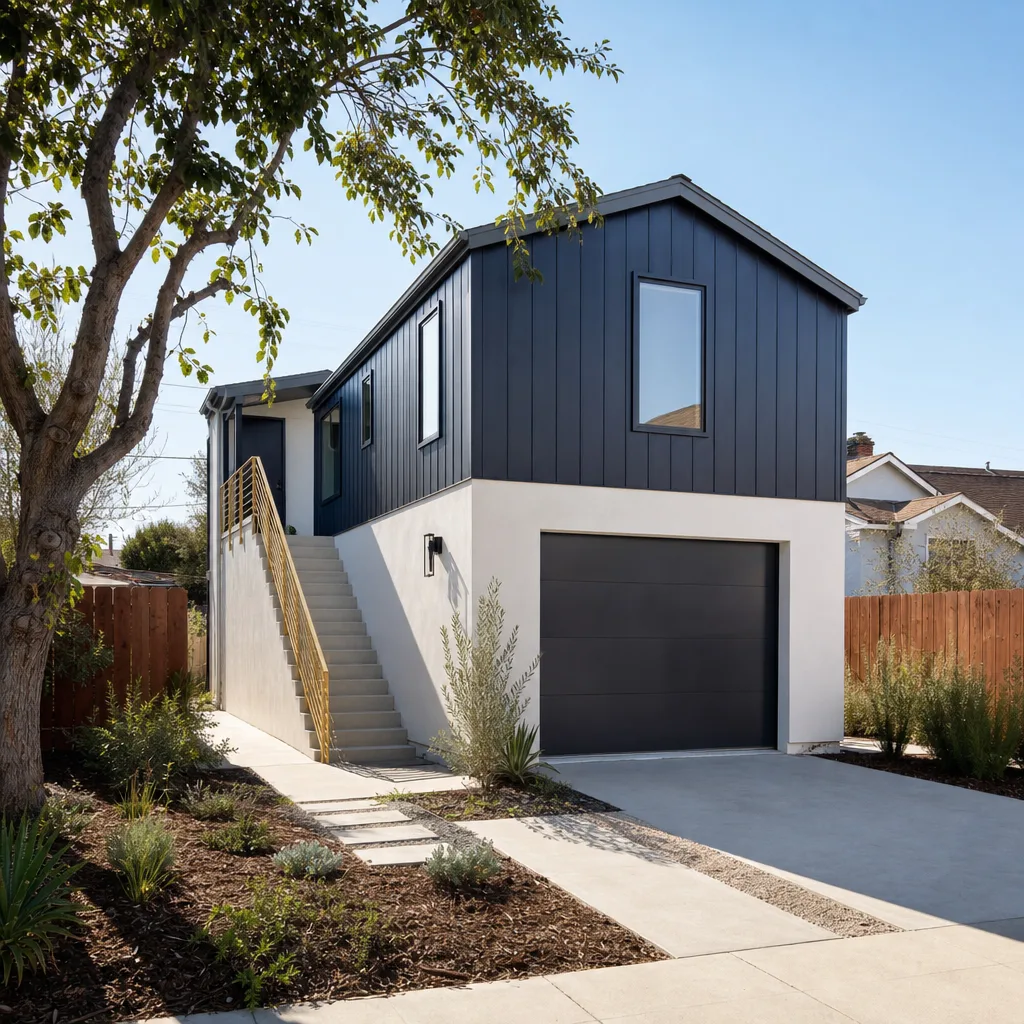
San Francisco’s ADU maintenance calendar is dictated by fog, wind, rain, and dry heat, in that order of daily impact. The work itself is not complicated: clean the gutters, inspect the roof and flashing before the rains, recaulk windows and doors during the dry-heat window, and watch coastal exteriors more closely during fog season. What matters is timing, because a task done in the wrong month doesn’t stick. If you’d rather hand the seasonal work to someone who understands this city’s climate, or if you’re considering adding an ADU to your lot, Sutton ADU San Francisco is here. We’ve been building in San Francisco since 2006, and we give every homeowner a written price before work begins. Call (831) 272-7212 to schedule your free estimate, or learn more about our room addition services in San Francisco and full ADU builds. For an overview of everything we do, visit the Sutton ADU San Francisco home page.
Written by Miles Hartwell, Owner at Sutton ADU San Francisco, serving San Francisco since 2006. Explore more guides & resources on our blog.