Last updated October 15, 2026
ADU Cost Breakdown: The San Francisco Homeowner’s Reference for 2026
Here’s the number most published ADU cost guides won’t tell you: the same 600-square-foot detached accessory dwelling unit can cost $210,000 or $360,000 in San Francisco, and the difference has almost nothing to do with the contractor you hire. It comes down to five specific decisions made before a shovel touches soil. Most homeowners have already made three of them without realizing they were decisions at all. This guide walks you through the full line-item breakdown for 2026, explains what actually moves your project between a $350-per-square-foot build and a $600-per-square-foot build, and shows you how to read a bid like someone who’s done this before. For a deeper dive into planning your project, see our The Complete Guide to ADU in San Francisco.
Quick Answer
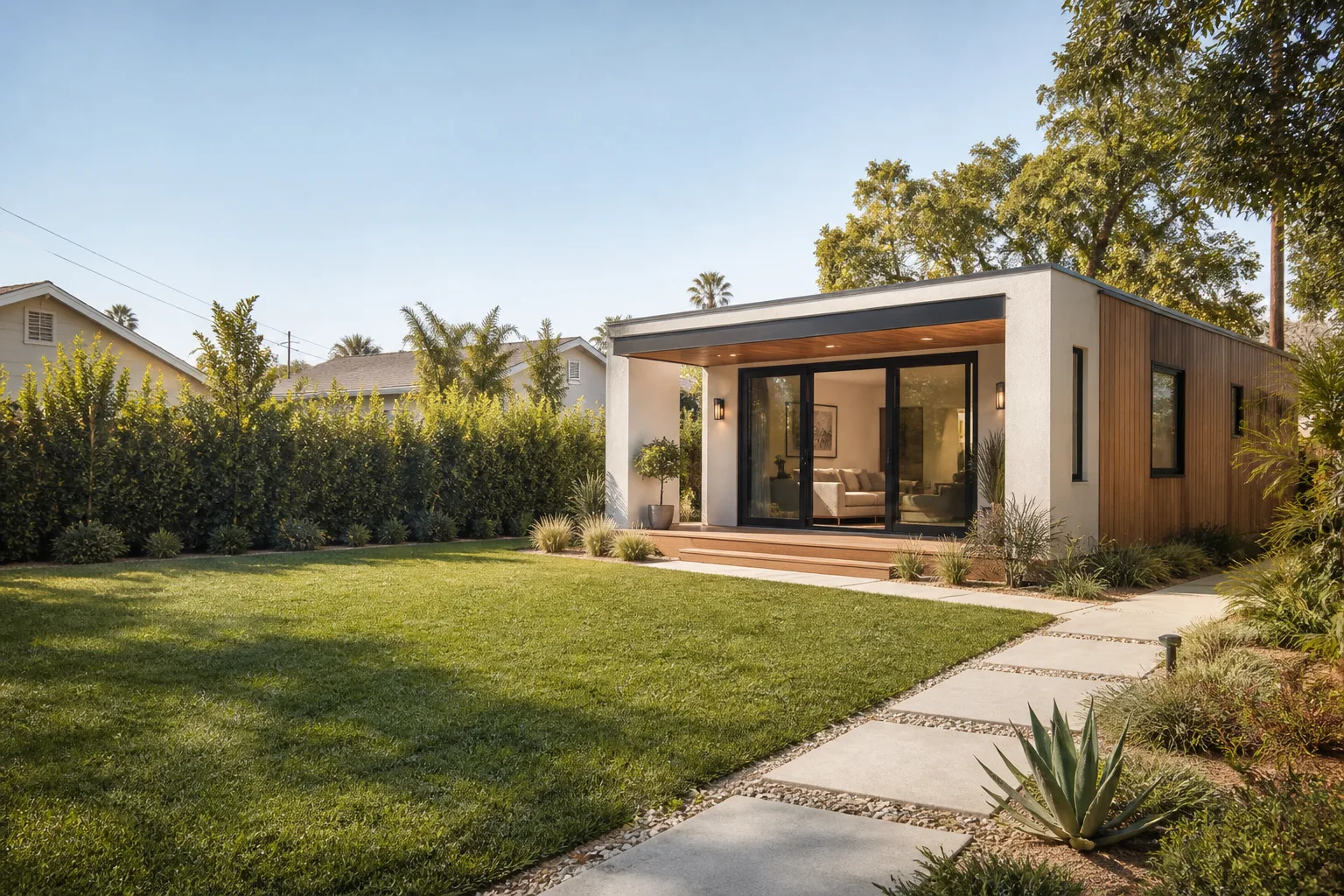
Most detached ADUs in San Francisco run between $180,000 and $320,000 for a 500- to 700-square-foot unit in 2026, which works out to roughly $350 to $600 per square foot depending on lot access, utility conditions, and design choices. A garage conversion typically lands between $120,000 and $220,000 because the shell already exists, while premium prefab ADUs from brands like Abodu or Cover start around $250,000 before site work. Total cost breaks into three buckets most guides blur together: hard costs (roughly 65-70%), soft costs like design and permits (15-20%), and carrying costs if you finance (10-15%).
Table of Contents
- The 2026 Line-Item Breakdown: Hard Costs, Soft Costs, and Carrying Costs
- The Five Variables That Decide Where Your Project Lands
- San Francisco Permit Fees, Engineering, and Utility Connections: The Real Numbers
- How Financing Method Changes Your Total Project Cost
- What a Locked Written Price Should Include
- Prefab ADUs vs. Stick-Built in San Francisco: What the Price Difference Buys
- Common Mistakes to Avoid
- When to Call a Professional
- Frequently Asked Questions
- The Bottom Line
The 2026 Line-Item Breakdown: Hard Costs, Soft Costs, and Carrying Costs
Before anyone can give you a meaningful price, you need to understand what’s actually being priced. Every ADU project in San Francisco has three cost categories, and most guides only show you the first one.
Hard Costs (65-70% of total project cost)
These are the physical materials and labor that become your ADU. In San Francisco, labor runs higher than most California markets because of union wage scales, the local cost of living, and competition for skilled crews. Here’s what a detached, stick-built 600-square-foot ADU typically looks like in 2026:
- Foundation and site work: $28,000-$55,000. San Francisco lots are notorious for variable soil quality. Clay-rich slopes in neighborhoods like Sunnyside or Miraloma Park often require deeper footings or pier drilling, which adds $10,000-$20,000 over a flat-lot build in the Sunset.
- Framing, roof, and exterior envelope: $55,000-$90,000. This includes lumber, sheathing, roofing material, windows, and exterior cladding. If you’re using James Hardie siding for fire resistance and low maintenance, expect to add $8,000-$15,000 over basic stucco.
- Plumbing, electrical, and HVAC: $35,000-$65,000. The wild card here is how far your ADU sits from the main sewer line and electrical panel. A 60-foot trench through an established backyard costs significantly more than a 15-foot connection.
- Interior finishes: $30,000-$55,000. Drywall, flooring, cabinetry, fixtures, paint, trim. This is the line item most homeowners adjust after seeing the first number, and it swings more than any other single category.
Soft Costs (15-20% of total project cost)
These are the fees you pay before and around construction that don’t involve a single nail being driven:
- Architectural and structural engineering: $18,000-$35,000. San Francisco’s Department of Building Inspection requires stamped drawings for almost every ADU, and structural engineers here charge a premium because seismic considerations are mandatory.
- San Francisco permit fees: $6,000-$14,000. This varies by project type. A garage conversion with existing foundation pays less than a new detached unit requiring sewer lateral replacement.
- Utility connection and impact fees: $4,000-$12,000. San Francisco Water, Power, Sewer (SFPUC) charges connection fees that many homeowners never see in a preliminary estimate.
- Survey and soil testing: $3,500-$7,000. The city requires a current survey for most ADU permits, and soil testing is mandatory for detached units on sloped lots.
Carrying Costs (10-15% if you finance)
If you’re paying cash, this category doesn’t apply to you. If you’re financing, it’s the silent budget-killer. Interest during construction, loan origination fees, and the gap between paying your first draw and getting your final inspection all add up. For a $280,000 project financed at 7% over a 14-month build, carrying costs run $22,000-$35,000. We’ll address this in detail below.
The Five Variables That Decide Where Your Project Lands
Here’s the thesis of this whole guide: the gap between $350 per square foot and $600 per square foot is real, it’s measurable, and it’s controlled by five specific factors. Once you understand these, a bid stops looking like an arbitrary number and starts looking like a set of choices you made.
1. Lot Access
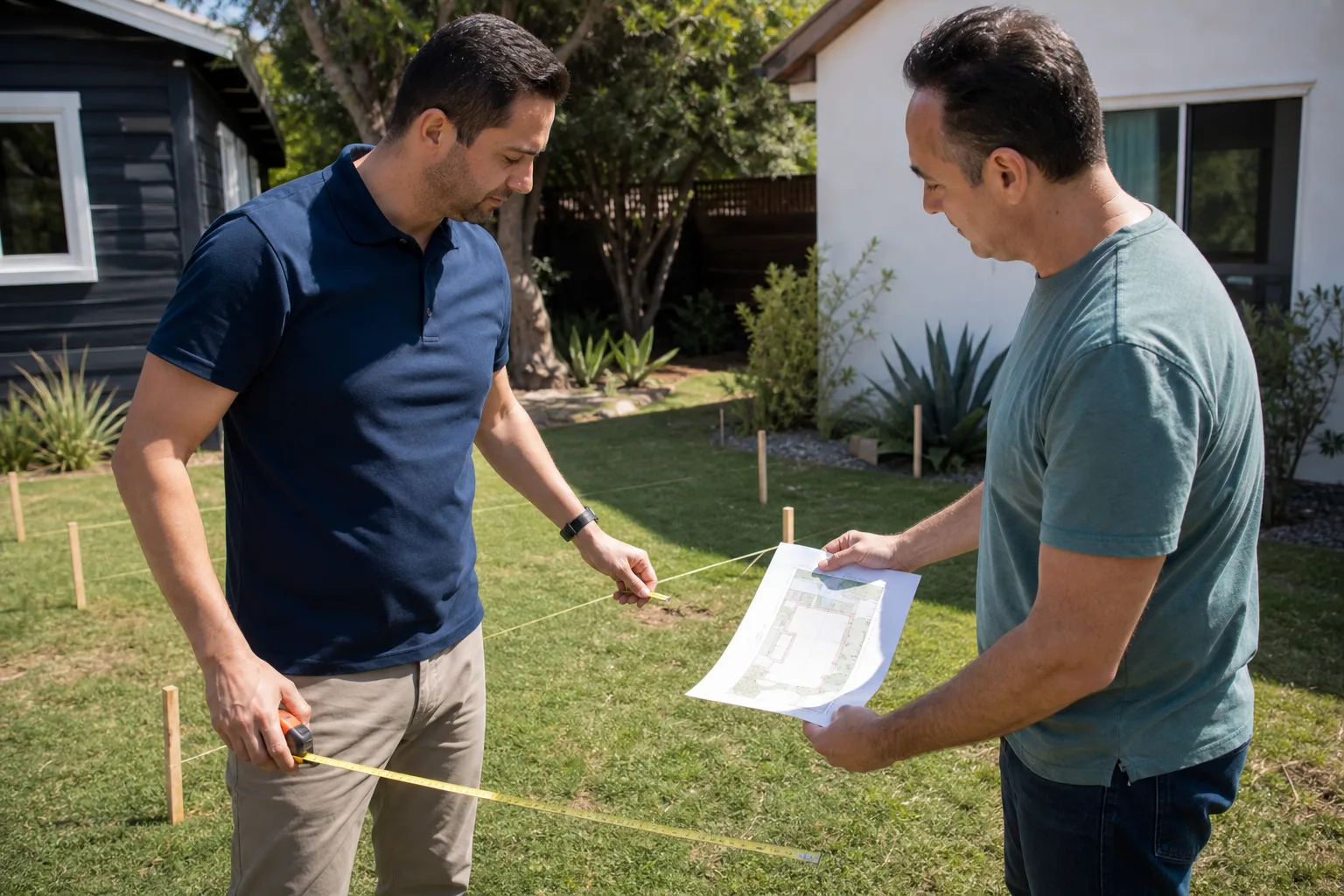
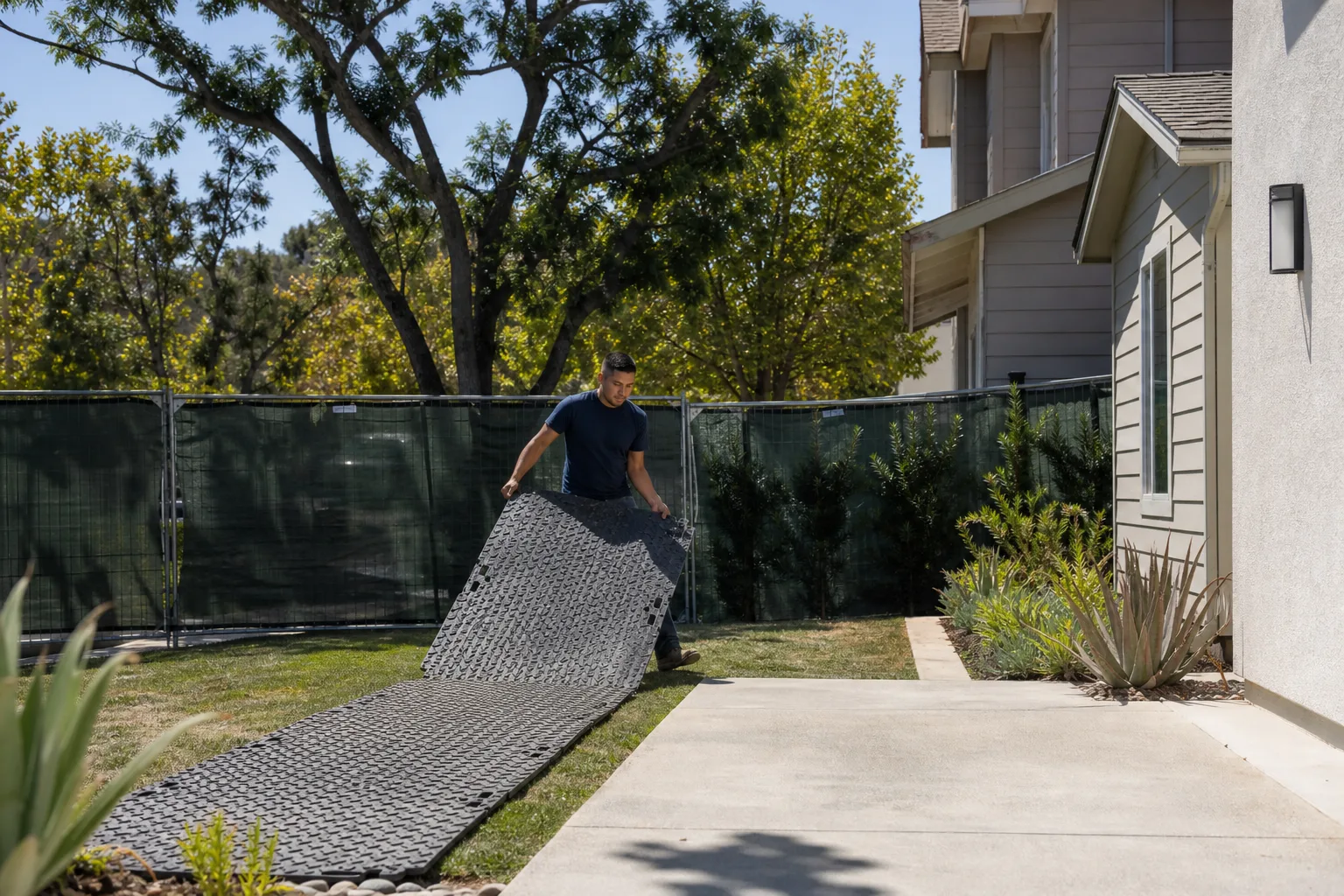
This is the variable most homeowners never think about, and it’s often the single biggest cost driver. If your backyard is accessible only through a 36-inch gate and your entire lot is 2,500 square feet, every material, every worker, and every tool has to enter through a narrow path. Excavation equipment may not fit, meaning hand digging or micro-equipment at premium rates. If your lot butts against a hillside in Glen Park or Diamond Heights, access gets even harder. Conversely, if you have a wide side yard and a driveway that fits a concrete truck, your costs drop substantially. In our experience across San Francisco, poor lot access alone can add $30,000-$60,000 to a detached ADU.
2. Existing Utility Conditions
San Francisco’s housing stock is old. Much of the city’s sewer lateral infrastructure dates to the early 20th century, and many homes still have 100-amp electrical panels that can’t support a second dwelling. If your sewer lateral is failing or misaligned, the city may require replacement before signing off on your ADU, which is a $12,000-$25,000 line item that never appears in a generic cost guide. Same story for electrical: upgrading from 100 amps to 200 amps runs $4,000-$8,000, and trenching new service to the ADU adds distance-based costs.
3. Soil and Slope Conditions
San Francisco is built on a mix of sand dunes, serpentine rock, and bay fill. Depending on your neighborhood, your foundation engineer may be designing for liquefaction zones (much of the Marina, parts of the Mission), expansive clay (Twin Peaks, Diamond Heights), or dense sand (Sunset, Richmond). Each requires different footing designs, drainage plans, and sometimes retaining walls. A flat lot in the Outer Sunset with sandy soil can be built on a standard slab for $25,000. A sloped lot in Noe Valley with serpentine rock may require drilled piers and a retaining wall, pushing foundation costs to $70,000 or more.
4. Design Complexity
Every corner, bump-out, skylight, and custom roofline adds cost. But complexity costs more in San Francisco than elsewhere because the city’s planning code restricts height, setbacks (the required gap between your new structure and the property line), and floor-area ratios, which means designers often have to get creative. That creativity translates to engineering hours, custom framing, and non-standard window packages. A simple rectangular footprint with a shed roof is the cheapest thing you can build. A two-story ADU with a roof deck in a neighborhood requiring design review will run toward the top of any range.
5. Permit Path
San Francisco offers two primary ADU Permits, Codes & Inspections in CA: What You Need to Know: a ministerial approval process for projects that meet all zoning standards, and a discretionary process for projects requiring variances. The ministerial path is faster and cheaper because the city legally cannot impose design review or discretionary conditions. Discretionary projects require hearings, neighborhood notification, and sometimes design revisions, adding $8,000-$20,000 in architect and expediter fees plus 3-6 months of carrying costs. Most detached ADUs in San Francisco qualify for the ministerial path, but the moment you want a variance, say, for reduced rear-yard setback, the cost profile changes.
San Francisco Permit Fees, Engineering, and Utility Connections: The Real Numbers
Here are the numbers most cost summaries bury or exclude entirely. These are 2026 figures based on current San Francisco Department of Building inspection fee schedules and SFPUC connection charges.
Permit Fees
- ADU building permit (detached, 500-700 sq ft): $5,500-$9,000
- Garage conversion permit: $3,500-$6,500
- Electrical permit: $800-$1,500
- Plumbing permit: $700-$1,400
- Mechanical permit: $500-$1,000
- School impact fees: $0 for ADUs under 750 sq ft, but larger units may incur fees depending on school district boundaries
Engineering and Design
- Architectural drawings: $8,000-$18,000 for a standard detached ADU
- Structural engineering: $5,000-$12,000, higher on sloped lots or in liquefaction zones
- Title 24 energy compliance: $800-$1,500
- Survey: $2,500-$4,500
- Soil report (if required): $2,000-$4,000
Utility Connection Fees (SFPUC)
- Sewer lateral connection or replacement: $8,000-$25,000 depending on depth and distance to main line. This is the single most common surprise cost in San Francisco ADU projects.
- Water connection: $3,000-$6,000 for new service
- PG&E electrical service upgrade: $4,000-$8,000 for panel upgrade; $6,000-$15,000 if trenching new underground service
The lesson here: any bid that doesn’t itemize permits, engineering, and utility connections is incomplete. Every dollar missing from the line items above will come back as a change order.
How Financing Method Changes Your Total Project Cost
Most cost guides quote construction costs as if money is free. It isn’t. The way you pay for your ADU changes the total amount that leaves your bank account.
Cash: The Baseline
Paying cash eliminates carrying costs entirely. You pay only hard costs and soft costs, plus the opportunity cost of pulling money out of other investments. For a $300,000 ADU, that’s essentially the full cost.
HELOC (Home Equity Line of Credit)
If you have equity in your San Francisco home, a HELOC is typically the cheapest financing option, with rates 1-2% below construction loans. You draw as needed, so interest accrues only on actual spending. However, HELOC limits are based on your loan-to-value ratio, and if you bought recently at peak pricing, you may not have enough equity. Total financing cost for a $300,000 project over 14 months at 8% interest: roughly $16,000-$20,000.
Construction Loan
Construction loans carry higher rates (1.5-3% above conventional mortgages) and may require interest-only payments during the build, followed by a conversion to a permanent mortgage. They also typically require a detailed draw schedule, which means the contractor’s invoicing process matters. Expect total financing costs of $22,000-$35,000 for a $300,000 project. The advantage: you can borrow against the post-completion value of the property, freeing you from current equity limits.
Cash-Out Refinance
With 2026 rates sitting above 6%, cash-out refis are less attractive than they were four years ago, but they remain an option. This works best when your current mortgage rate is higher than what you’d refinance into. The financing cost is effectively the difference between your old and new rate spread across the entire loan balance, not just the ADU amount.
The financing choice matters for one reason beyond dollars: it affects your draw schedule, which affects the contractor’s cash flow, which can affect the pace of your build. A client paying cash can move faster than a client waiting on bank inspections before the next draw releases.
What a Locked Written Price Should Include
Here’s where we get blunt. Most ADU bid disputes in San Francisco stem from what’s not in the bid, not what’s in it-a problem we cover in our ADU Warning Signs: A San Francisco Homeowner’s Reference Guide. A complete bid should break into at least these eight line items:
- Site work and foundation – including excavation, grading, hauling, and any shoring or retaining.
- Rough framing and structural – including roof structure and shear walls, with specific lumber grades named.
- Exterior envelope – roofing, windows, insulation, and specific siding products (James Hardie, stucco, etc.).
- Rough plumbing and electrical – including permit fees, fixture counts, and panel upgrades.
- HVAC – specific equipment brand and capacity, not just “heating and cooling.”
- Interior finishes – flooring type, cabinet grade, countertop material, paint sheen. A bid that says “standard finishes” is a bid that hasn’t priced your job.
- Soft costs – permit fees, engineering, survey, soil testing, Title 24, and any city-required inspections.
- Site restoration – landscaping, irrigation, fence repair, concrete flatwork. This line item is omitted from an alarming number of bids.
A bid that lacks any of these eight categories will generate change orders. Period. At Sutton ADU San Francisco, our written price is delivered before work begins, and the line items above are specified to the product level, not the category level. Explore more guides & resources to keep your project on track. That’s what a locked price actually means: you know what you’re getting, and you know what it costs.
For a deeper look at the building process itself, see our guide to working with ADU builders in San Francisco, which covers timeline, crew logistics, and inspection milestones.
Prefab ADUs vs. Stick-Built in San Francisco: What the Price Difference Buys
San Francisco homeowners increasingly ask about prefab and modular brands, and for good reason: factory construction reduces weather delays, shortens on-site build time, and locks material prices. But the headline price for a prefab unit is not the total cost of installing it on your lot.
Prefab and Modular Options
Brands like Abodu and Cover offer turnkey detached ADUs starting around $220,000-$280,000 for their smallest models, with totals reaching $400,000+ for larger units with premium finishes. That price typically includes the factory-built unit, delivery, installation, and standard finishes. What it does not include: site preparation, foundation, utility trenching and connections, permit fees, and landscaping. On a typical San Francisco lot, those additional costs run $60,000-$120,000.
Dvele and Mighty Buildings offer higher-end modular units with more advanced materials, and their pricing reflects it: most Dvele ADUs land between $350,000 and $500,000 all-in. Boxabl offers a smaller footprint at lower cost, though their units are currently best suited for garage conversions or compact accessory units rather than full-scale residences.
Stick-built construction in San Francisco typically costs 10-15% less than premium prefab for the same square footage, but takes 3-6 months longer. The calculus: prefab buys speed and predictability; stick-built buys design flexibility and often lower total cost. We work with both approaches because the right answer depends on your lot, your timeline, and your budget. A Tuff Shed structure converted to an ADU can be the lowest-cost entry point in some San Francisco neighborhoods, though it requires full permitting and finishes anyway.
If you’re expanding the main house instead of adding a separate unit, our room addition services in San Francisco cover a similar cost-per-square-foot range but with different permit requirements.
Common Mistakes to Avoid
- Ignoring the sewer lateral. San Francisco’s aged infrastructure means many homeowners discover a collapsed or misaligned lateral mid-project. Get a sewer inspection before you finalize your budget, not after excavation starts. A $15,000 lateral replacement destroys a nice round budget.
- Building without verifying lot access. If a concrete truck can’t reach the foundation pour site, you’ll pay for a pump truck or hand placement. Confirm access with your contractor during the estimate, not on pour day.
- Pricing the ADU but not the panel upgrade. Adding a second dwelling with a kitchen, laundry, and mini-split almost always trips a 100-amp panel. Budget $6,000-$8,000 for the upgrade and trenching if needed.
- Skipping the soil report on a sloped lot. San Francisco’s hillside neighborhoods hide surprises. A $3,500 soil report can prevent a $40,000 foundation redesign after excavation reveals refusal rock or unstable fill.
- Accepting a bid without specific finish allowances. If your bid lists “cabinetry: included,” you have no idea whether you’re getting builder-grade particleboard or plywood boxes. Demand brand and grade specifications for flooring, cabinets, counters, and fixtures.
- Signing without a written change-order process. Scope changes happen on every project. What matters is how they’re priced and documented. A written change order requires your signature before additional work begins, which protects you from surprise invoices later.
- Financing without modeling carrying costs first. Interest during construction, inspection delays, and bank draw schedules all add to total cost. Run the numbers before choosing between cash, HELOC, and construction loan.
When to Call a Professional
ADU construction in San Francisco is not a DIY project, and it’s not a handyman project. The moment you’re dealing with foundation engineering, sewer connections, electrical service upgrades, or any structural modification, you need a licensed general contractor who carries workers’ compensation insurance and pulls permits in their own name. High-tension equipment isn’t the concern here; seismic safety, waterproofing, and code compliance are. A poorly flashed window or an undersized shear wall can compromise the structure and fail inspection. If you’re serious about moving forward, Sutton ADU San Francisco offers free estimates across San Francisco. Call us at (831) 272-7212 and we’ll walk your lot with you, identify the variables above that apply to your property, and deliver a written price before anyone picks up a hammer.
Frequently Asked Questions
Most detached ADUs in San Francisco cost between $180,000 and $320,000 in 2026, or roughly $350 to $600 per square foot, depending on lot access, soil conditions, utilities, design, and permit path. Garage conversions typically run $120,000 to $220,000, and premium prefab ADUs from manufacturers like Abodu or Cover start around $220,000 before site work. Call (831) 272-7212 for an exact quote on your property, the estimate is free.
Most single-family lots in San Francisco can accommodate at least one ADU under state law and the city’s local ordinance, but specific rules govern setbacks, height limits, floor-area ratio, and parking requirements based on your zoning district and lot size. The most reliable way to determine feasibility is to check your property’s zoning designation with the San Francisco Planning Department, then have an architect or builder evaluate the lot. We do this evaluation as part of our free estimate.
A typical detached ADU in San Francisco takes 10 to 16 months from design to final inspection, with permitting alone ranging from 2 to 6 months depending on your permit path. Prefab units can shorten on-site construction to 3 to 5 months after site preparation and foundation work, but design and permitting timelines remain similar. Call (831) 272-7212 for a timeline estimate specific to your project.
Yes. Your ADU requires separate permits for electrical, plumbing, and mechanical work, each with its own inspection schedule, plus SFPUC approval for water and sewer connections. These permits are typically pulled by your general contractor and bundled into the overall project permit, but their fees are separate and should be itemized in your bid.
Yes. San Francisco reassesses property value when new square footage is added, which increases your annual property tax bill. The increase typically reflects the added value of the ADU, not a full reassessment of the entire property, and is calculated at the standard San Francisco property tax rate of approximately 1.18%. Your tax professional can model the specific impact for your property.
Almost always yes, because the foundation, framing, and roof already exist. A garage conversion in San Francisco typically runs $120,000 to $220,000 versus $180,000 to $320,000 for a comparable detached unit, and the permit process is often faster. The tradeoff is design flexibility: you’re working within an existing footprint rather than choosing your own.
The Bottom Line
An ADU in San Francisco is a significant investment, but it’s one with a predictable cost structure once you understand the variables. Your total will depend on five things: how easy your lot is to access, what shape your utilities are in, what’s under your soil, how complex your design is, and whether you qualify for the ministerial permit path. Get those questions answered before you commit to a budget. Get a written price with specific line items before you sign. And understand that the cheapest bid is rarely the cheapest build; an incomplete bid becomes change orders later. We’ve been building in San Francisco since 2006, and every project we take follows The Threshold Standard: a written price before work begins, a 365-Day Done Right Promise covering workmanship, and a crew that arrives with a name, a photo badge, and a clean uniform. For a deeper look at the process, see our home addition contractor services, or start here on our main page for an overview of what we do.
Written by Miles Hartwell, Owner at Sutton ADU San Francisco, serving San Francisco since 2006.