Dvele Site Prep & Utilities: The San Francisco Owner’s Guide
If you own a Dvele home in San Francisco and site prep or utility work has failed or needs upgrading, we stock and install Dvele-compatible components with typical installed pricing running $4,500 to $28,000 depending on scope, from trenching and conduit runs to full utility drops and foundation pad corrections. We can usually diagnose the issue within 48 hours of your call. Most owners discover a problem when a utility feed stops performing, a drainage issue surfaces after heavy rain, or a site-prep element like grading or retaining starts shifting on San Francisco’s hillside lots.
Dvele builds precision-engineered prefab homes, but the site work beneath them is done by local contractors, and that’s where San Francisco owners run into trouble. Clay soils, steep grades, and utility corridors that date back decades all put stress on the connections between your Dvele and the ground it sits on. We’re an independent service provider, not affiliated with Dvele, but we’ve worked on enough of their units across the Bay Area to know exactly what fails and what it costs to make right.
Which Dvele Models This Applies To
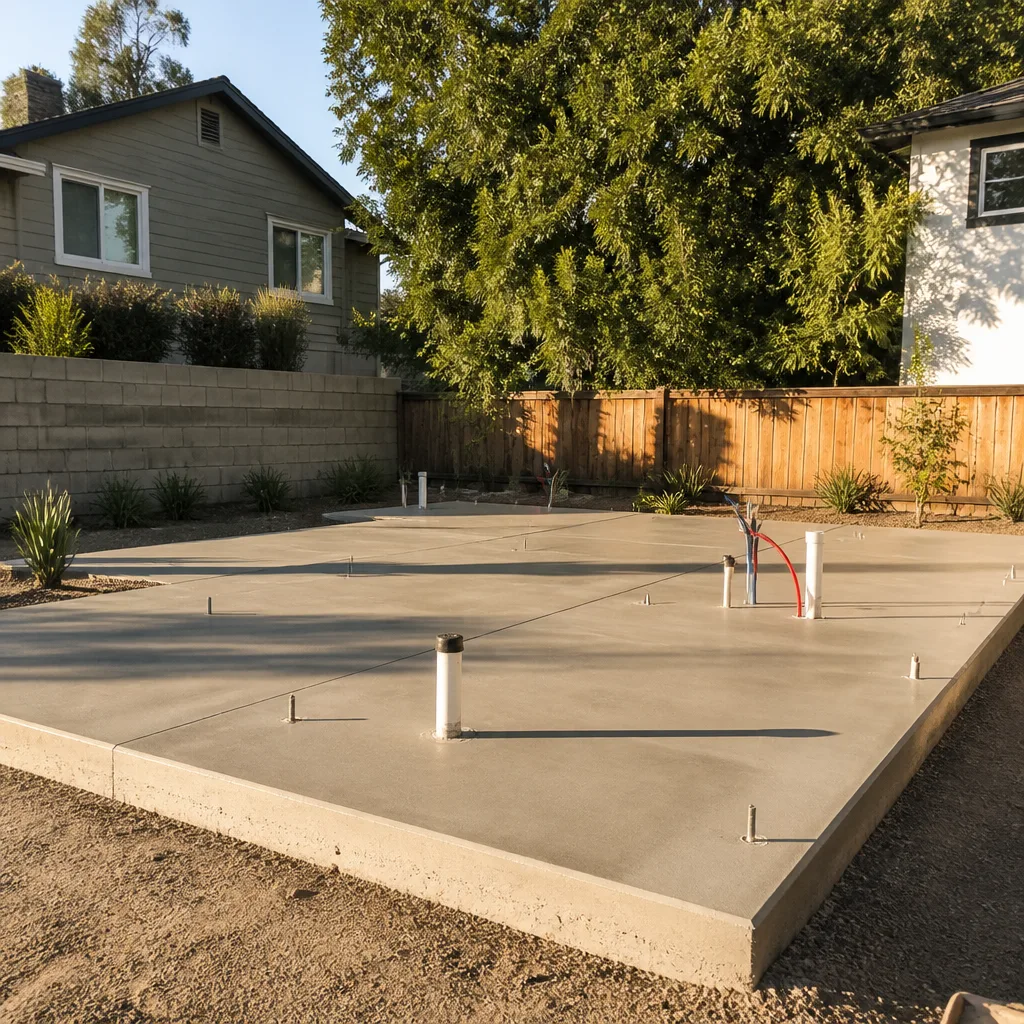
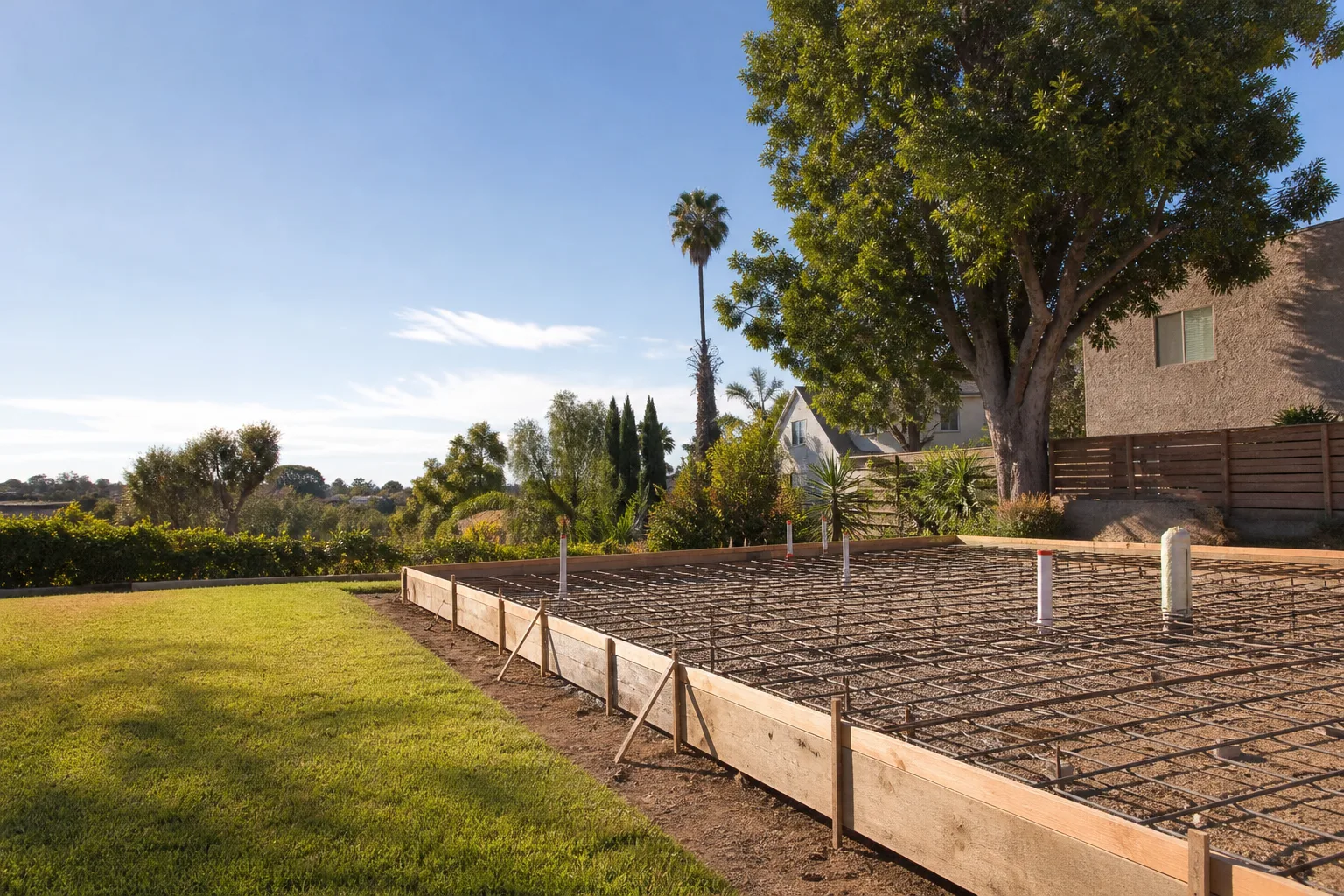
Dvele’s current lineup includes the Dvele IQ series, the Dvele Adapt line, and their original Dvele Origin models, all of which share the same site-prep DNA: a steel chassis foundation, under-slab utility channels, and factory-installed mechanical rough-ins that must connect cleanly to your San Francisco lot’s existing water, sewer, gas, and electrical infrastructure. The site prep and utilities scope applies to every model, but the exact connection points vary by chassis length, ranging from 480 square feet on their smallest IQ model up to 3,200 square feet on the multi-module Adapt configurations.
Identifying the right components starts with your Dvele serial plate, usually mounted inside the mechanical closet or on the chassis beam near the utility entry point. That plate lists your module count, chassis dimensions, and utility rough-in locations. One gotcha we see regularly in San Francisco: older Dvele Origin units used a proprietary low-voltage control conduit that local electricians often splice into incorrectly during repairs, which causes intermittent sensor faults throughout the home. We keep the correct Dvele-spec conduit adapters and transition fittings on hand because the aftermarket versions sold at Bay Area supply houses are not always dimensionally compatible with the factory raceway.
Signs Your Dvele Site Prep & Utilities Is Failing
- Water pooling near the chassis perimeter after rain. This usually means your site grading has settled or your French drain has clogged with San Francisco’s clay-heavy runoff. Standing water against a Dvele chassis accelerates corrosion on the steel frame, even with the factory coating.
- Electrical flicker isolated to one wing or module. This is often a failing underground feeder splice at the module transition point, a known weak spot on early Dvele installations where contractors used standard wire nuts instead of the spec’d waterproof compression connectors.
- Sewer odor near the utility entry wall. A shifting foundation pad can crack the ABS waste line where it exits the chassis. Dvele’s rigid frame doesn’t flex, but the ground under it does, and that differential movement puts stress exactly at the connection point.
- Gas pressure drops when multiple appliances run. Many San Francisco Dvele lots share aging PG&E laterals that were sized for a single-family home, not the added load of a second dwelling. Your Dvele’s factory manifold may be fine while the supply line from the street is undersized.
- Visible gaps between the chassis and your site pad. This indicates differential settling. On sloped lots in neighborhoods like Diamond Heights or the hills above Noe Valley, we see this within the first three years when the original site contractor skipped proper compaction.
Replacement Cost & What’s Included
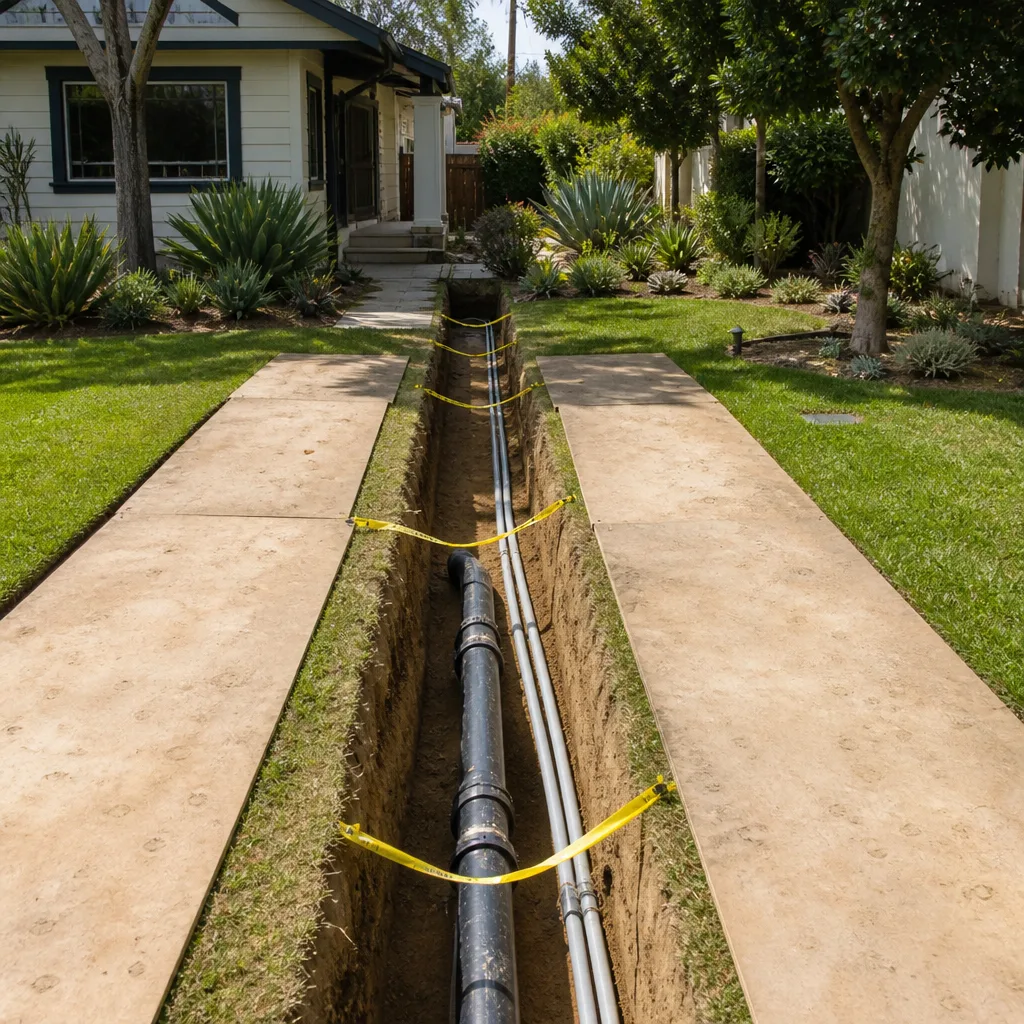
Site prep and utility work in San Francisco runs the full spectrum, so here’s what we quote most often. A straightforward utility repair, like replacing a failed underground conduit run or splicing a damaged sewer lateral, typically lands between $4,500 and $9,000. Re-grading and compacting a settled foundation pad with drainage correction runs $8,000 to $18,000. A full utility replacement including trenching for new electrical, gas, water, and sewer service from the street to the Dvele chassis runs $18,000 to $28,000, with the spread driven by trench depth, soil conditions, and whether PG&E or SFPUC needs to be involved.
Every quote includes parts, labor, equipment, haul-away, and any required inspections. You get a written line-item price before we start, and that price does not change unless you change the scope. That’s the Threshold Standard, and Miles Hartwell has built Sutton ADU San Francisco on it since day one.
DIY or Call Us?
You can safely inspect a few things yourself: check for visible standing water after rain, look for gaps between the chassis and pad, and note which fixtures flicker or drain slowly. Document what you find. But utility work on a Dvele involves live electrical, pressurized gas, and buried sewer lines. A wrong splice on a gas line or an improperly bonded electrical connection inside the utility channel is genuinely dangerous. We do not recommend opening any utility access panel or digging near any marked utility line without a trained professional on site.
On a Dvele, the stakes are higher because the home’s automation and mechanical systems are integrated. A voltage irregularity that a conventional home shrugs off can corrupt a Dvele’s control modules. If you need a straight answer on whether something is worth fixing now or can wait, call (831) 272-7212 and we’ll walk you through it.
FAQs
In San Francisco’s climate and soil conditions, you can expect 20 to 30 years from properly installed utility feeds and site pads, but we routinely see premature failures at the 3- to 7-year mark on Dvele installs where the original contractor cut corners on compaction or used substandard fittings. The site work under a Dvele gets more environmental abuse than the home itself. Call (831) 272-7212 if you suspect your site work is aging faster than it should.
Yes, in roughly 60 percent of cases we can repair the specific failure point, whether it’s a cracked fitting, a corroded splice, or a localized drain blockage. Full replacement only makes sense when the original run was undersized or multiple failure points exist. We’ll give you an honest assessment and a written price for both options before you choose.
Most utility replacements on a Dvele in San Francisco take 3 to 6 working days, including trenching, installation, inspection, and backfill. If PG&E or SFPUC requires coordination for street-side connections, add a week or more depending on their scheduling. We’ll give you a timeline in writing before we begin.
Yes. We keep Dvele-spec transition fittings, waterproof compression connectors, chassis-compatible conduit adapters, and compatible drain components on hand because off-the-shelf parts from local supply houses don’t always match the factory specifications. This is one area where using the correct part matters more than saving a few dollars.
If your Dvele is showing any of the signs above, or if you just want a professional opinion on your site work, call (831) 272-7212. We’ll schedule a visit, send you the name and photo of your technician before they arrive, and give you a written price before any work starts. That’s how we do every job in San Francisco.
Written by Miles Hartwell, Owner, Sutton ADU San Francisco at Sutton ADU San Francisco, serving San Francisco and nearby areas.