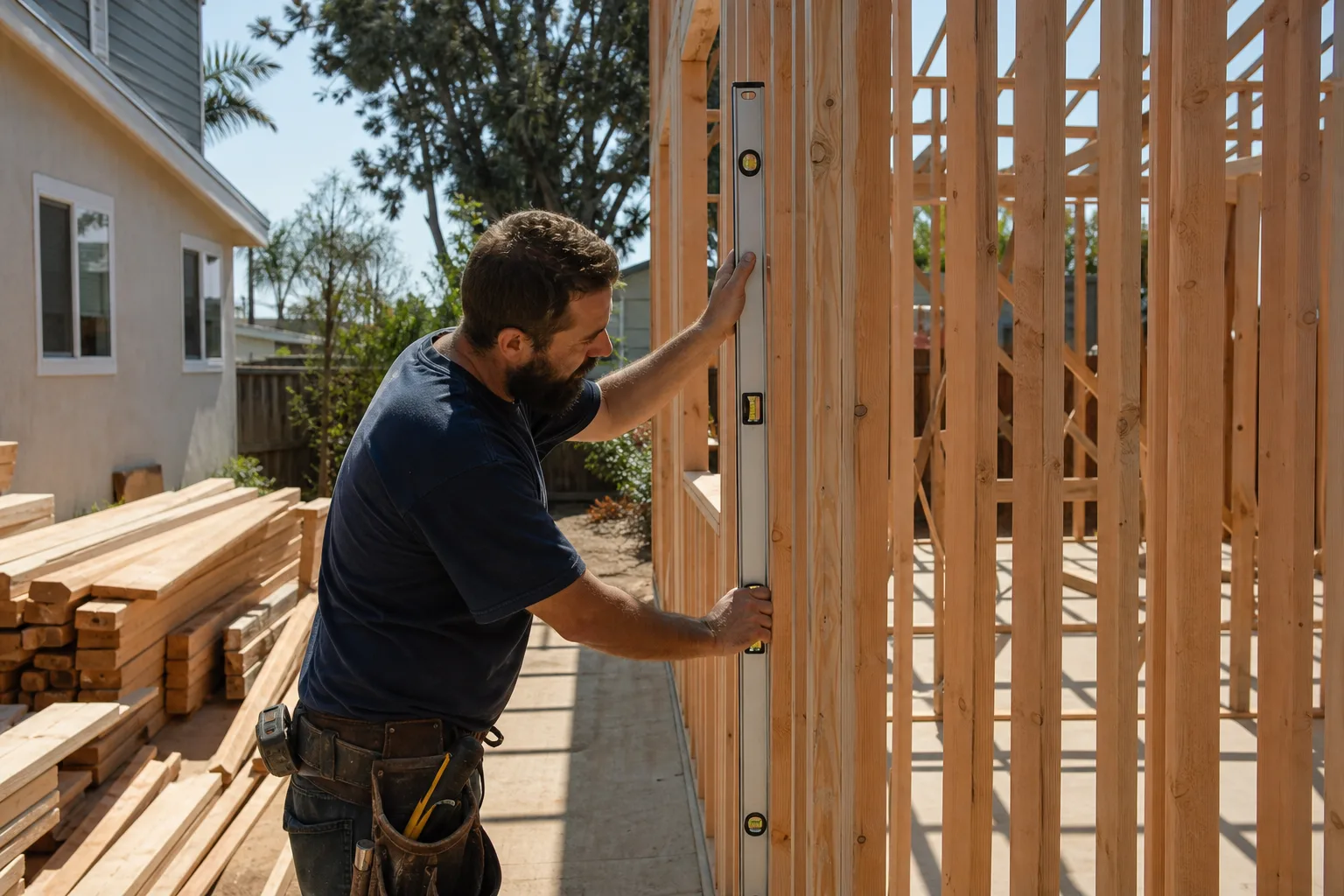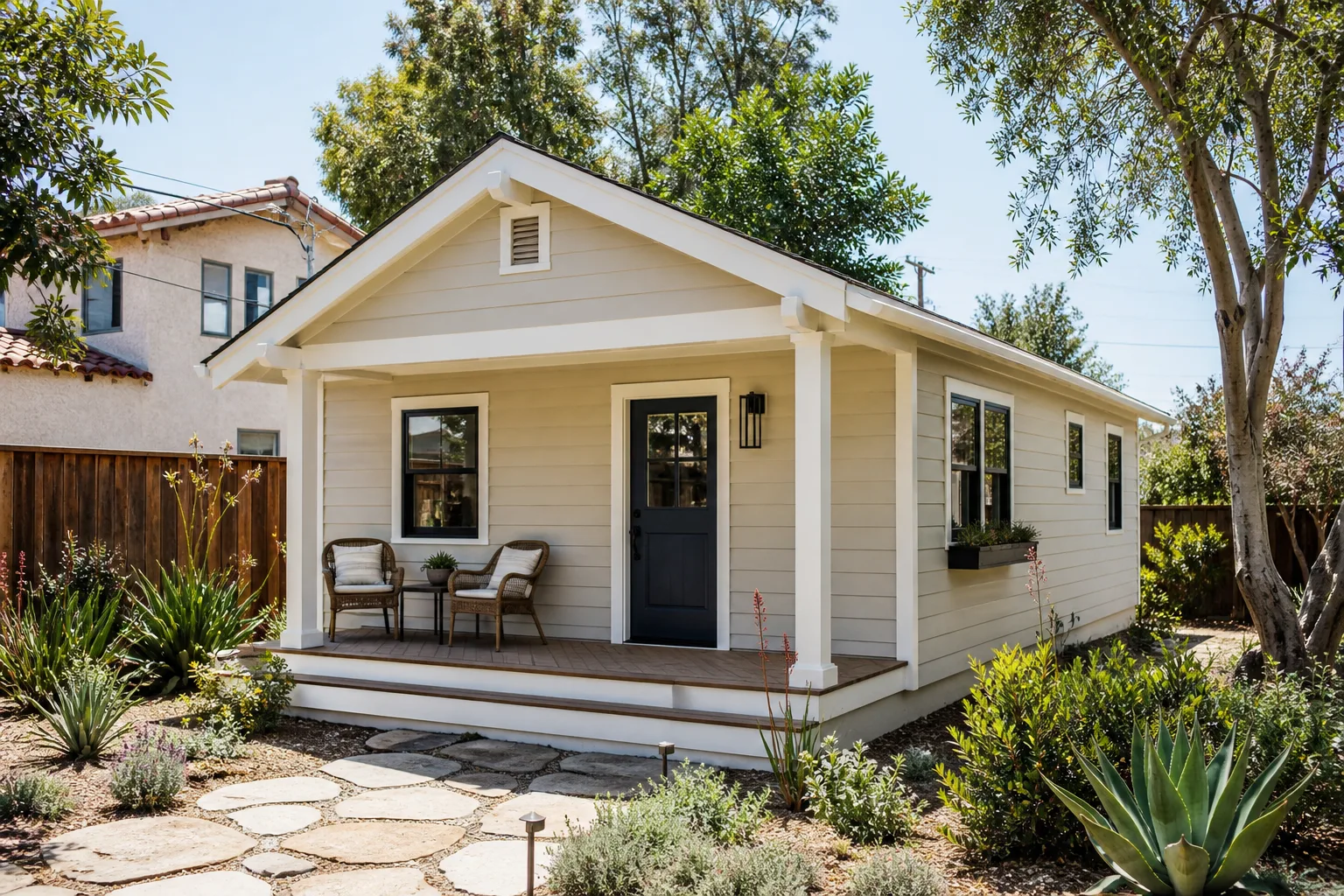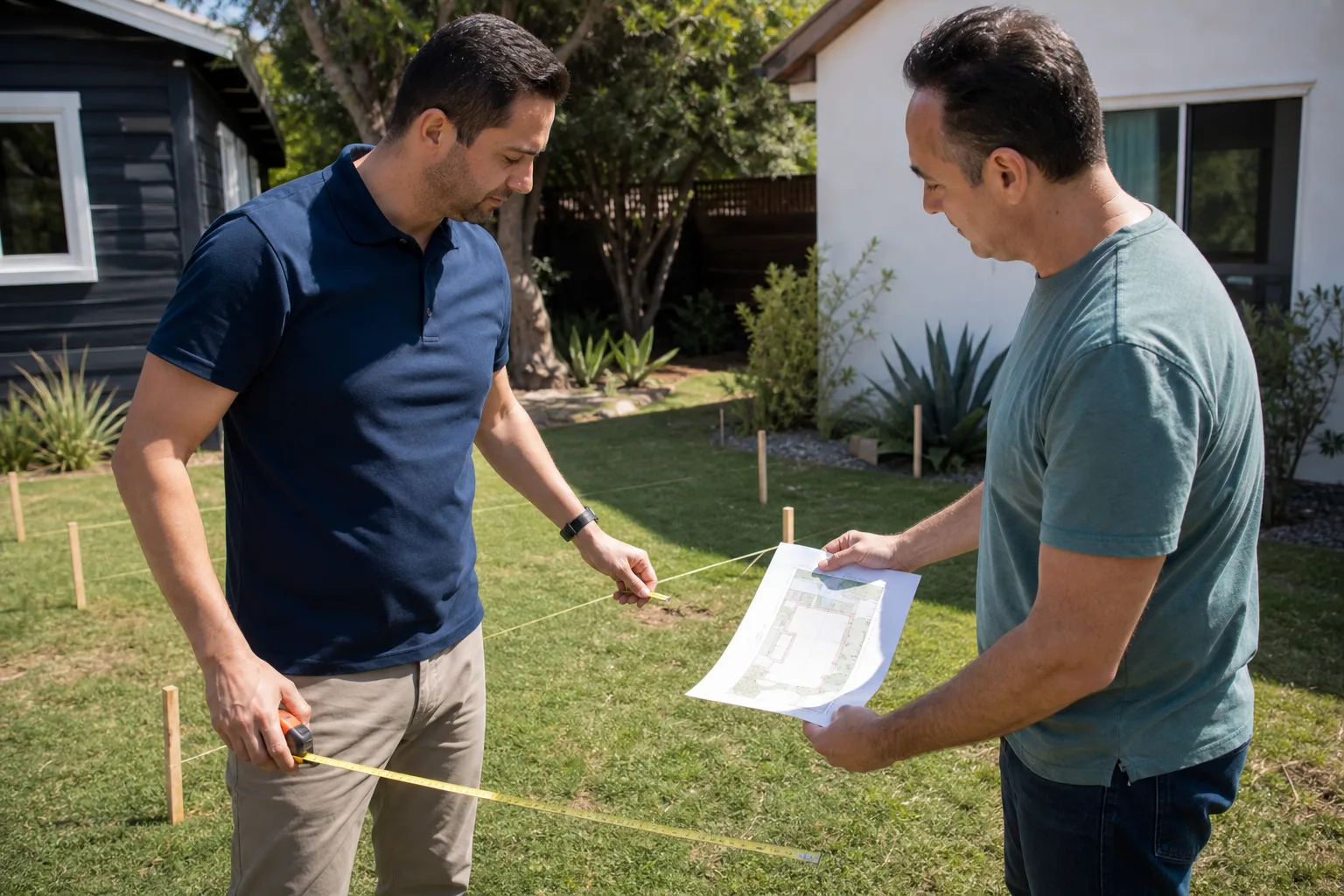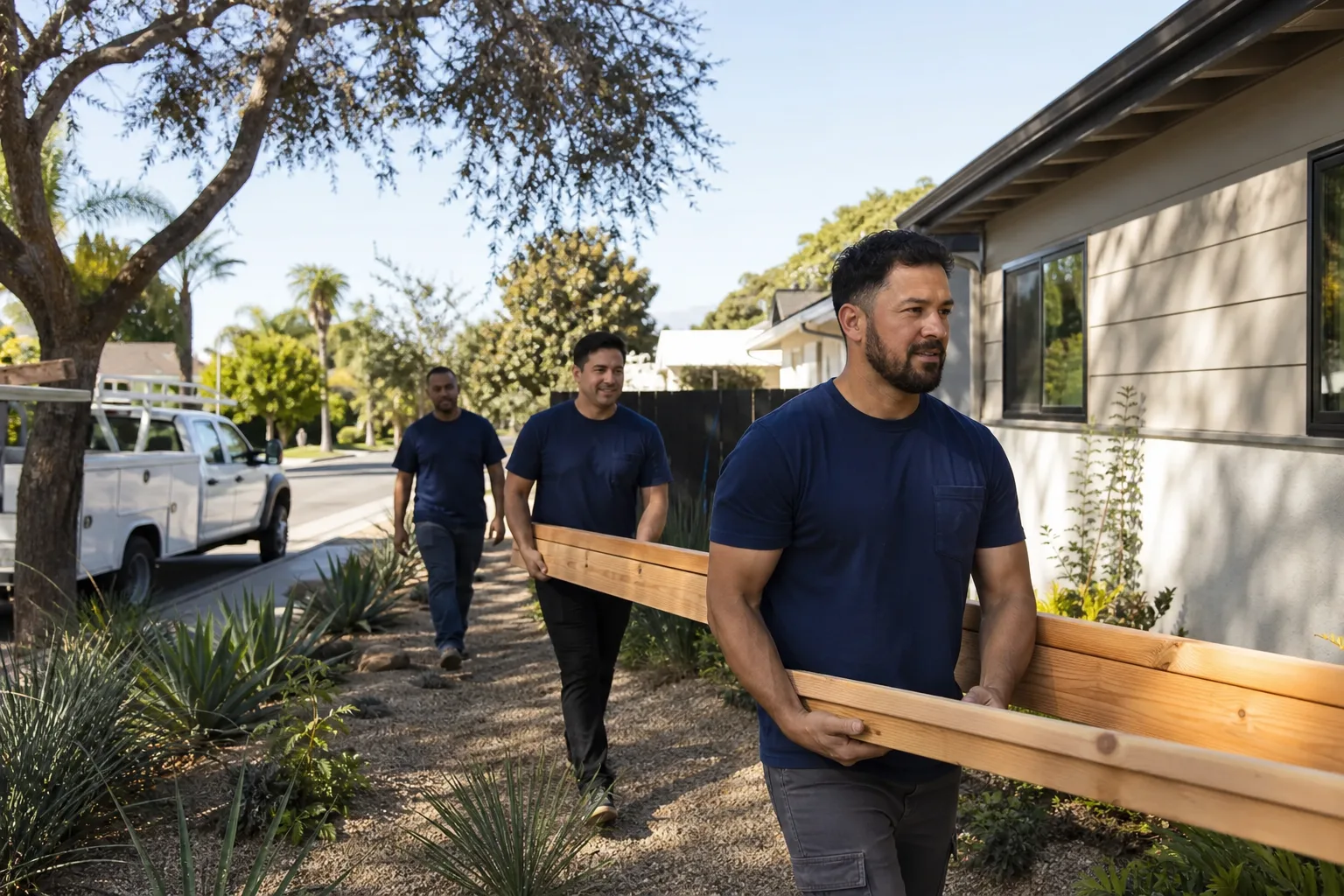
A free site visit, a check of what your lot allows and a written, line-item price.
Get your free estimateHow Much Does Junior ADU & Interior Conversion Cost in San Francisco?
A junior accessory dwelling unit (JADU) in San Francisco typically costs $80,000 to $160,000 when built as an interior conversion of existing space, while a garage or basement conversion into a full ADU runs $150,000 to $350,000 depending on foundation work, utility runs, and finish level. These figures reflect San Francisco’s 2026 market, where labor rates, permit fees, and seismic requirements push costs higher than almost anywhere else in the Bay Area. The price difference between a JADU and a full ADU comes down to one thing: a JADU converts space already inside your home’s footprint, while an attached or detached ADU requires new square footage or major structural work.
Most San Francisco homeowners we work with land in the $110,000 to $220,000 range for a complete junior ADU and interior conversion project, including design, permits, construction, and finishes. A basic JADU carved from an existing bedroom or garage alcove can be done for under $100,000. A full interior conversion with a new bathroom, kitchenette, and separate entrance will push past $200,000. The good news: San Francisco’s ADU ordinances are among the most permissive in California, and interior conversions avoid the costly site work that drives up prices on detached units.
Every project Sutton ADU San Francisco takes on starts with a written price before any work begins. You’ll know your exact number before a single tool is lifted, and the 365-Day Done Right Promise covers that workmanship for a full calendar year from completion.
Key Takeaways:
- JADU interior conversions: $80,000 – $160,000
- Full ADU garage/basement conversions: $150,000 – $350,000
- Permit fees in San Francisco: $3,000 – $12,000 depending on scope
- Timeline: 3 – 7 months for most interior conversions
- San Francisco waives certain impact fees for ADUs under 750 sq ft
Looking for more detail on what these projects involve? Start with our Junior ADU & Interior Conversion in San Francisco service page, then come back here for the full pricing picture.
Junior ADU & Interior Conversion Cost Breakdown (2026)
Here’s what a typical interior conversion costs in San Francisco right now, broken down by line item. These are real numbers from projects we’ve priced across the city, from the Richmond and Sunset districts to Bernal Heights, Noe Valley, and Bayview.
| Cost Component | JADU (Interior Conversion) | Full ADU (Garage/Basement Conversion) |
|---|---|---|
| Design & Architecture | $4,000 – $10,000 | $10,000 – $25,000 |
| San Francisco Permits & Fees | $3,000 – $7,000 | $7,000 – $12,000 |
| Demolition & Site Prep | $3,000 – $8,000 | $8,000 – $20,000 |
| Plumbing (bath/kitchenette rough-in) | $12,000 – $25,000 | $18,000 – $40,000 |
| Electrical (subpanel, wiring, fixtures) | $8,000 – $18,000 | $12,000 – $30,000 |
| HVAC / Ventilation | $5,000 – $12,000 | $10,000 – $22,000 |
| Insulation, Drywall & Framing | $10,000 – $22,000 | $20,000 – $45,000 |
| Flooring | $4,000 – $10,000 | $8,000 – $18,000 |
| Kitchenette / Wet Bar | $8,000 – $20,000 | $15,000 – $35,000 |
| Bathroom (full) | $15,000 – $35,000 | $20,000 – $50,000 |
| Separate Entrance / Egress | $3,000 – $12,000 | $8,000 – $25,000 |
| Finishes & Fixtures | $8,000 – $20,000 | $15,000 – $40,000 |
| Contractor Overhead & Margin | 15 – 25% of total | 15 – 25% of total |
| TOTAL RANGE | $80,000 – $160,000 | $150,000 – $350,000 |
What pushes a project to the top of that range in San Francisco? A few things. Older homes are the biggest variable: if your house predates 1940 (as most do in the Richmond, Sunset, and Mission districts), you’ll likely face knob-and-tube wiring replacement, clay sewer lines that need upgrading, or insufficient floor joists that require reinforcement. In Golden Gate Heights or Forest Hill, steep lots add retaining wall and drainage work. In the Marina and Cow Hollow, liquefaction zones can require additional foundation engineering.
What keeps costs down? A JADU that doesn’t need a full kitchen. San Francisco code allows a JADU to share the main house’s kitchen, which eliminates a $15,000 – $35,000 line item. Interior conversions on the same floor as an existing bathroom also save on drain line runs, since you’re not punching through concrete or routing pipes across the house.
One more note on San Francisco specifically: the city’s planning code allows an efficiency unit with a small kitchenette (no full range) to be classified as a JADU, which triggers lower permit fees and faster review. That’s a meaningful savings when you’re looking at the difference between a $5,000 permit and a $10,000 permit.
What Affects Junior ADU & Interior Conversion Pricing in San Francisco
San Francisco is not a generic construction market. Here’s what actually moves the needle on your final price:
- Foundation condition and seismic work. Many San Francisco garages were built before 1940 with unreinforced concrete or brick foundations. Converting one into living space triggers mandatory seismic retrofit requirements under San Francisco’s soft-story ordinance in some cases, and even when not legally required, a structural engineer will likely recommend foundation upgrades. Add $15,000 – $40,000 if your garage sits on a slab that needs cutting for plumbing or if your basement walls need shear reinforcement.
- Neighborhood and lot conditions. Stairwell access in a three-story Marina flat means hauling materials by hand instead of direct-to-site delivery. Narrow streets in North Beach or Telegraph Hill limit crane and dumpster placement. In Noe Valley and Glen Park, hillside lots often require retaining walls or drainage work before framing begins. Each of these adds $5,000 – $25,000 in San Francisco labor and logistics costs.
- Plumbing and sewer line upgrades. San Francisco’s combined sewer system and aging laterals mean many interior conversions trigger a lateral replacement requirement from the SFPUC if the existing line fails inspection. A sewer lateral replacement runs $8,000 – $25,000 depending on depth and street conditions. Even when the lateral passes, adding a bathroom to an upper floor in a 1920s Edwardian often means running new drain lines through floors and walls, which gets expensive fast.
- Fire safety requirements. An ADU conversion requires a fire-rated separation between the unit and the main house, which means Type X drywall, solid-core doors with self-closers, and potentially a residential fire sprinkler system. Sprinklers add $8,000 – $20,000. In the Sunset and Richmond districts, where homes are close together, the fire department reviews egress and separation carefully.
- Kitchen scope: efficiency vs. full. A JADU with an efficiency kitchen (sink, small refrigerator, microwave, no range) costs significantly less than a unit with a full kitchen. The difference can be $20,000 – $40,000 once you account for gas line work, ventilation, and the added electrical load.
- Finish level. IKEA-grade cabinets and builder-basic tile keep a conversion near the bottom of the range. Custom cabinetry, stone countertops, and designer fixtures push it toward the top. In San Francisco, where even modest homes sell for $1.5M+, many owners choose mid-to-high finishes to protect resale value, which adds $15,000 – $40,000 over basic spec.
How to Save on Junior ADU & Interior Conversion
The biggest savings in San Francisco come from smart scoping, not cheap materials. Here’s what we tell homeowners who want to keep costs down without cutting corners:
- Choose a JADU over a full ADU when possible. Converting existing bedroom, office, or storage space inside your home’s current footprint avoids foundation work, exterior walls, and separate utility meters. This is the single largest cost lever, worth $50,000 – $150,000 in most San Francisco homes.
- Share the main house’s systems. A JADU that uses the existing water heater, HVAC, and electrical panel avoids major infrastructure costs. Don’t add a second water heater if code doesn’t require it. Don’t install a separate HVAC system if the main house’s system can serve a small unit with a simple duct branch.
- Skip the full kitchen. An efficiency kitchen saves $20,000 – $40,000 against a full kitchen in San Francisco’s 2026 market. If your tenant will primarily use the unit as a studio or in-law suite, this trade-off often makes sense for years to come.
- Plan for San Francisco’s permit timelines. Over-the-counter review for simple JADUs can take a few weeks. A full plan review with the Department of Building Inspection can take 2 – 4 months, and time is money when you’re carrying a construction loan or paying a contractor to wait. Simpler scopes that qualify for over-the-counter review save both fees and carrying costs.
- Lock in a written price before work starts. This is not a soft suggestion. Vague estimates and cost-plus contracts are how San Francisco ADU projects blow past $400,000. Every Sutton project includes a written price delivered before work begins, so you know your number before demolition starts. No scope creep passed silently to the bill.
If you want to talk through your specific lot and budget, call us at (831) 272-7212. Estimates are free, and you’ll get a real person on the line, 24/7, not a voicemail tree.
Junior ADU & Interior Conversion Timeline and Cost Implications
Time affects cost in ways that don’t show up on a line-item quote. Here’s a realistic look at how long a San Francisco interior conversion takes and where the schedule risks sit.
A JADU built within existing walls typically takes 3 – 5 months from design kickoff to final inspection. A full garage or basement conversion runs 5 – 7 months, and outliers with foundation work or sewer lateral replacement can stretch to 8 – 9 months.
The biggest schedule variable in San Francisco is permit review. The Department of Building Inspection prioritizes ADU applications under state law (AB 68 requires a 60-day review window), but the department’s actual turnaround depends on workload and plan completeness. An application with missing details, unclear structural calculations, or non-compliant window placement will bounce back for corrections, and each cycle adds 2 – 6 weeks. We’ve seen projects sit in permit purgatory for 6 months because of a missing fire-rating detail on a stairwell wall.
Material lead times have improved since 2022, but custom windows, certain cabinet lines, and specialty doors still run 6 – 12 weeks. In San Francisco, where many homes have non-standard window sizes from the 1920s and 1930s, custom orders are more common than in newer housing markets, and that adds time.
The practical takeaway: if you want your unit rentable by a specific date, start the design process at least 8 months before that target. And if you’re comparing bids, ask each contractor how they handle permit corrections and material delays. A low bid that strands you mid-project for 4 months while the contractor moves to another job costs more than a fair bid with a written schedule and a 365-day promise behind it.
San Francisco-Specific Regulations That Affect Your Budget
San Francisco’s ADU rules are unusually favorable, but there are specifics that hit your wallet directly.
Impact fee waivers. San Francisco waives development impact fees for ADUs under 750 square feet, which saves $5,000 – $20,000 compared to other Bay Area cities. For ADUs between 750 and 1,000 square feet, fees are reduced proportionally. This is a state law (AB 68) and a city ordinance, which means it applies to every project, not just those using certain builders.
Minimum ceiling heights. San Francisco requires 7-foot minimum ceiling height for habitable space, with some exceptions for sloped ceilings in existing basements. Many older garages measure in at 6’8″ to 6’10”, which triggers either digging down (expensive, $30,000 – $80,000) or design workarounds that reduce usable space. If your garage ceiling is under 7 feet, get an honest structural assessment before you fall in love with the idea of a conversion.
Separate entrance requirements. Interior ADUs must have a separate entrance in most San Francisco zoning districts, though JADUs do not. A separate entrance can mean cutting a new exterior door (with egress window), which adds $8,000 – $25,000 depending on wall construction and whether you’re putting a door in a concrete foundation wall versus a wood-framed wall.
Owner occupancy. San Francisco requires owner occupancy for JADUs under state law, meaning you must live in the main house or the JADU. This doesn’t affect construction cost, but it affects your financing and rental plans. If you plan to rent both units as an investor, you’ll need to look at a full ADU instead.
Historic district restrictions. Homes in designated historic districts (such as parts of the Mission, Duboce Triangle, and Jackson Square) face additional design review. This can add $3,000 – $8,000 in architect time and 1 – 3 months in review. If your home has a historic designation, budget for it up front.
What a Junior ADU Interior Conversion Actually Looks Like: Step by Step
Here’s the practical sequence for a typical San Francisco JADU conversion, so you know what to expect when the crew arrives.
- Design and feasibility (weeks 1 – 4). A designer or architect measures your existing space, checks structural feasibility, and produces permit-ready drawings. For a JADU, this is often faster than a full ADU because the footprint already exists.
- Permit submission (weeks 4 – 8). Plans go to the San Francisco Department of Building Inspection. JADUs in existing conforming space often qualify for over-the-counter review, which can take as little as 2 – 3 weeks. Complex projects go through plan check, which takes 6 – 12 weeks.
- Demolition (weeks 8 – 10). The crew removes existing finishes, opens up walls, and prepares the space. This is also when we discover what’s behind the walls, which is why our written pricing accounts for reasonable unknowns up front.
- Rough-in (weeks 10 – 14). Plumbing, electrical, and HVAC lines are run. Inspections happen at this stage to verify the work before walls are closed.
- Insulation, drywall, and finishes (weeks 14 – 20). Walls are closed, flooring goes in, cabinets and fixtures are installed. Paint and trim complete the space.
- Final inspection (weeks 20 – 24). The city inspects the completed unit. Once signed off, the space is officially rentable or usable as living space.
Your Sutton crew sends names and photos to you before anyone arrives. Every technician is background-checked and identity-verified under the Threshold Verified standard, so you’ll never wonder who’s at your door. That’s not a policy; it’s a system, and it’s in writing on every project we do.
Financing a Junior ADU in San Francisco
San Francisco homeowners have several practical paths to pay for an ADU conversion, and most of our clients use one of the following:
Home equity line of credit (HELOC). With San Francisco median home values above $1.4M, many homeowners have $300,000+ in equity. A HELOC typically offers the lowest interest rate and most flexible draw schedule since you pay interest only on what you use during construction.
Cash-out refinance. If you bought before 2020, you may be sitting on significant equity with a lower rate than current market rates. Cashing out equity preserves that low rate and gives you a lump sum to fund the project in full.
Construction loan. For larger projects over $250,000, a dedicated ADU construction loan structures draws against milestones and converts to a permanent mortgage at completion. Rates run 1 – 2 points higher than standard mortgages, but the structure protects the lender and often the borrower.
San Francisco-specific programs. The city has offered past ADU incentive programs through the Mayor’s Office of Housing, though availability varies year to year. The state’s CalHFA ADU Grant Program has also provided up to $40,000 in certain years. Check current availability before committing, as these programs open and close based on funding cycles.
None of this is financial advice, but we talk about these numbers with clients weekly. The most common mistake we see: starting construction without a full capital plan and running out of money before finishes are installed. If your project is $180,000, have $200,000 available. San Francisco’s construction environment is too expensive to wing it.
Does a Junior ADU Add Value to a San Francisco Home?
In short, yes, and the numbers are compelling. A completed JADU in San Francisco typically adds $100,000 – $200,000 to the property’s resale value, which often means the project pays for itself on paper immediately. The rental income potential is the bigger prize: a one-bedroom JADU in the Sunset or Richmond rents for $2,200 – $2,800 per month in 2026, while units in Noe Valley or the Mission push past $3,000.
That said, the value math depends on two things. First, the unit must be legal and permitted. An unpermitted in-law unit adds minimal value and creates liability when you sell. Second, the finish level must match the neighborhood. A rental-grade JADU in a $2.5M home in Noe Valley reads as an afterthought and underperforms on appraisal.
What’s the market reality in 2026? Buyers in San Francisco actively search for homes with existing, permitted ADUs. The income offsets the mortgage, and aging parents or adult children add a compelling use case. Homes with legal JADUs in the Inner Sunset and Bernal Heights regularly sell within days when priced correctly. This is one of the few renovation projects where the financial case is clearcut before you swing a hammer.
Common Mistakes That Inflate Junior ADU Costs in San Francisco
We’ve priced and built enough of these to know where budgets go sideways. Here’s what to watch:
Starting without a structural assessment. A garage that looks fine on the surface may have a cracked foundation, undersized joists, or dry rot at the sill plate. Discovering these issues after demolition means a change order, and change orders during construction are always more expensive than the same work planned and priced in advance. The fix: get a structural engineer’s report before you submit permits, not after demo starts.
Underestimating San Francisco’s permit timeline. Homeowners who assume the city will approve permits in 2 weeks and then face 10-week plan check end up paying carrying costs on a vacant space. Budget for San Francisco’s actual review timeline, and if your project qualifies for over-the-counter review, take that path.
Scope creep on finishes. A client starts with builder-grade finishes and then upgrades to custom cabinets, stone counters, and high-end fixtures after seeing a showroom. Each upgrade adds real money in San Francisco’s labor market. The fix: pick all finishes before construction starts, and price them at that time. A written price locks in your selections.
Hiring without verified credentials. San Francisco has no shortage of unlicensed contractors working ADU jobs. The result is often incomplete work, failed inspections, and no recourse. Every Sutton technician is background-checked and identity-verified under the Threshold Standard, and you’ll see a photo ID badge at the door. That verification is part of what you’re paying for, and it’s worth it.
FAQs – Junior ADU & Interior Conversion Cost
How much does a junior ADU cost in San Francisco in 2026?
A junior ADU in San Francisco typically costs $80,000 to $160,000 for an interior conversion of existing space. Simpler JADUs under 400 square feet with an efficiency kitchen can land near $85,000, while larger units with full bathrooms and separate entrances push toward $150,000. Call (831) 272-7212 for an exact quote on your specific home, estimates are free.
Is it cheaper to build a JADU or convert a garage in San Francisco?
A JADU is almost always cheaper, typically $80,000 – $160,000 compared to $150,000 – $350,000 for a garage conversion. The difference comes down to foundation work, seismic retrofitting, and utility runs. A JADU uses space already inside your home’s heated footprint, avoiding the most expensive parts of a garage conversion. Call (831) 272-7212 and we’ll help you compare the two options for your specific lot.
How long does a junior ADU interior conversion take in San Francisco?
Most JADU interior conversions in San Francisco take 3 – 5 months from design kickoff to final inspection. Permit review is the biggest variable: over-the-counter reviews can clear in 2 – 3 weeks, while full plan checks run 6 – 12 weeks. Schedule your project at least 8 months before you need the unit ready.
Do I need a separate entrance for a JADU in San Francisco?
No. San Francisco does not require a separate entrance for a junior ADU, which keeps costs down by $8,000 – $25,000 compared to a full ADU that requires one. A JADU can share the home’s main entry, though many homeowners choose to add direct interior access from the main living area.
What permits do I need for a junior ADU in San Francisco?
A JADU requires building, electrical, plumbing, and sometimes mechanical permits from the San Francisco Department of Building Inspection. Total permit fees typically run $3,000 – $7,000 for a JADU and $7,000 – $12,000 for a full ADU. Impact fees are waived for units under 750 square feet. Your contractor should handle all permitting as part of the project scope, and Sutton’s written price includes permit costs up front.
Can you come today for a free estimate?
Yes. We offer free estimates, and a live person answers our phone 24 hours a day, 7 days a week. Call (831) 272-7212 and we’ll schedule a walkthrough of your space, talk through your budget, and deliver a written price before any work begins.
If you’re weighing a JADU against other options for adding living space, take a look at our home page for an overview of how Sutton ADU San Francisco approaches every project, from small interior conversions to full detached units.
Call Sutton ADU San Francisco for a Free Estimate
You should know exactly what your junior ADU will cost before you commit, and you should know exactly who’s walking through your door. Both are standard practice here. Founded in 2006, Sutton ADU San Francisco is the ADU-specialist member of the Threshold Group family, which means every project carries the Threshold Standard: a written price before work begins, a 365-Day Done Right Promise covering workmanship for one full calendar year, and a free second visit if any element fails. Every technician is background-checked, identity-verified, uniformed, and photo-badged, and you’ll receive their name and photo before anyone arrives at your door.
Sutton is an old English name for a south farm, and adding a second home to your lot is exactly that kind of settled, rooted decision. We work with recognized prefab and modular ADU brands such as Abodu, Cover, Dvele, Mighty Buildings, Boxabl, and Plant Prefab, plus Tuff Shed structures and James Hardie exterior systems, so you’ll get honest guidance on which product line fits your lot and budget rather than a push toward whatever’s easiest for us.
Call (831) 272-7212 today for a free estimate on your junior ADU or interior conversion. A live person answers, every time, and your written price comes before any work begins.
Written by Miles Hartwell, Owner at Sutton ADU San Francisco, serving San Francisco homeowners since 2006.
Pricing reflects the San Francisco market as of 2026. Sutton ADU San Francisco offers free estimates – call (831) 272-7212.
What Our Customers Say
"Every crew member was vetted and carried a badge, which matters when they are around your family for months. Tidy site every day."
- Daniel F."Insulated the walls and ceiling properly. It stays comfortable even in July."
- Tamika W."They handled the drawings and the permit paperwork for us. All I had to do was pick the finishes."
- Rosa M.